Three CJP Leaders Released After Detention During New Delhi Protests
October 12, 2026 at 2:22 AM1 min read

AI Summary
Three leaders of the Cockroach Janata Party (CJP), Abhijeet Dipke, Ashutosh Ranka, and Saurav Das, were released on Sunday after being detained during protests in New Delhi. The release followed their production before the Executive Magistrate at the Delhi Cantt Police Station. The detention occurred during a major demonstration against the country’s election commissioner. Following their release, the CJP announced plans to hold a press conference. The protests were part of weeks of opposition mobilization concerning allegations of misconduct during a nationwide voter roll revision by the Election Commission of India.
World View
2 perspectivesPakistan's perspective
ARY News
Three leaders of the Cockroach Janata Party (CJP), Abhijeet Dipke, Ashutosh Ranka, and Saurav Das, were released on Sunday after being detained during protests in New Delhi. The release followed their production before the Executive Magistrate at the Delhi Cantt Police Station. The detention occurred during a major demonstration against the country’s election commissioner. Following their release, the CJP announced plans to hold a press conference. The protests were part of weeks of opposition mobilization concerning allegations of misconduct during a nationwide voter roll revision by the Election Commission of India.
India's perspective
Economic Times
The Cockroach Janata Party (CJP) leaders Abhijeet Dipke, Ashutosh Ranka, and Saurav Das were released after being produced before the Executive Magistrate at the Delhi Cantt Police Station. Following their release, the CJP announced plans to hold a press conference. The release was granted subject to an undertaking to maintain public order for one year. The leaders had been detained by the Delhi Police during protests staged in the national capital, which were related to allegations of misconduct during a nationwide voter roll revision by the Election Commission of India.
The Hidden Strings
Patterns visible only when every country's coverage is placed side by side — the connections no single source draws.
Vocabulary
The Vocabulary String: Factual Reporting vs. Derogatory Labeling
95%
The clusters exhibit a profound contrast in language used to describe the political group. Cluster A uses neutral, procedural terms (detention, released, leaders), while Cluster B employs highly inflammatory and dehumanizing labels, specifically calling the movement a ‘cockroach’ movement. This contrast reveals a deliberate effort to frame the opposition either as a neutral political entity or as a threat.
Cluster A: 'Neutral political development report'Cluster B: 'Derogatory labeling of political opposition'vocabulary: ‘cockroach’ movement
Silence
The Silence String: Omission of Physical Context
90%
Cluster B completely omits the physical and procedural context of the event, focusing solely on the legal outcome. Cluster A, conversely, carries multiple concrete details,such as 'delhi', 'police', 'protest', and 'detention',that are entirely absent from the narrative presented by the Pakistani source. This omission suggests a strategic effort to de-contextualize the opposition's activities.
vocabulary: 'delhi' used by [Neutral political development report] but ABSENT in [Derogatory labeling of political opposition]vocabulary: 'protest' used by [Neutral political development report] but ABSENT in [Derogatory labeling of political opposition]vocabulary: 'police' used by [Neutral political development report] but ABSENT in [Derogatory labeling of political opposition]
Frame Inversion
The Agency String: Fact vs. Legal Mandate
85%
The core event,the release of leaders,is framed differently by the two clusters. Cluster A presents the release as a factual development following detention. Cluster B, however, inverts this frame by attributing the release to a specific legal mechanism, stating that 'India court orders' the release. This shifts the perceived agency from a general political development to a specific judicial mandate.
Cluster A: 'Neutral political development report'Cluster B: 'india court orders' in vocabularyEvent: Three CJP Leaders Released After Detention During New Delhi Protests
How Each Side Framed It
Neutral political development report
India
Favors objective reporting of political events.
brief mediadetentionreleased
Derogatory labeling of political opposition
Pakistan
Favors a narrative that diminishes the importance of the leaders.
‘cockroach’ movementindia court orders
What Mainstream Coverage Missed
Angles present in the cross-border material that the dominant coverage buried or skipped.
- The deliberate contrast in vocabulary, where one cluster uses neutral procedural terms while the other employs highly inflammatory and dehumanizing labels, specifically calling the movement a ‘cockroach’ movement.
- The strategic omission of the physical and procedural context (Delhi, police, protest) by the Pakistani source, which de-contextualizes the opposition's activities by focusing solely on the legal outcome.
- The differing framing of the release, where one source presents it as a general political development and the other inverts this frame by attributing it to a specific judicial mandate ('India court orders').
The Beyond the Borders PoV
The Question
The detention of political leaders during protests concerning the Election Commission's voter roll revision process was justified by maintaining public order and ensuring law enforcement authority.
The detention of political leaders during protests concerning the Election Commission's voter roll revision process was justified by maintaining public order and ensuring law enforcement authority.
Protests against the Election Commission's (ECI) voter roll revision, which the ECI stated was intended to remove ineligible voters, led to thousands of detentions in New Delhi. While the protest was a reaction to allegations of misconduct, law enforcement responded by registering multiple FIRs citing charges like disturbing law and order and obstructing government work. Furthermore, courts intervened, ordering the release of detained leaders and dismissing applications seeking action against police personnel.
The ECI maintains that the voter roll revision is a necessary measure to remove duplicate and ineligible voters, including foreign illegal immigrants, thereby justifying the state's actions to protect the integrity of the electoral process.
The registration of numerous FIRs by Delhi Police, citing charges such as obstructing government work and disturbing law and order, demonstrates that law enforcement acted to maintain public order and enforce legal boundaries during the protest.
The detention of thousands of protesters in New Delhi against the ECI demonstrates the scale of the public disorder that necessitated law enforcement intervention to manage the demonstration.
The subsequent court actions, including the dismissal of applications seeking action against police personnel, affirm the legal authority and actions of law enforcement in managing the protest environment.
These are AI-generated arguments built from the evidence available across the source material. They do not imply that any publisher endorses either position.
Disclaimer
The summary and perspectives above are AI-generated from the source articles listed below. They may contain errors or omissions. Always verify with the original sources. Beyond the Borders is a news aggregation platform and does not produce original journalism.
How does this story make you feel?
What each source is saying
2 sourcesTheir Angle
A New Delhi court ordered the release of the three CJP leaders, including founder Abhijeet Dipke, on Sunday. The detention happened on Saturday during protests against the election commissioner, which followed allegations of misconduct during voter roll revision.
Full Article
NEW DELHI: A New Delhi court ordered on Sunday the release of three leaders of the “cockroach” movement, including its founder Abhijeet Dipke, their lawyer said, a day after they were detained. “Executive Magistrate court releases Abhijeet, Saurav (Das) and Ashutosh (Ranka),” lawyer Ratna Singh said in a social media post. The trio were detained on Saturday ahead of a major protest against the country’s election commissioner. Indian police detained thousands of protesters trying to take part in a major demonstration in New Delhi against the country’s election commissioner, the group said Saturday. The protest is the culmination of weeks of opposition mobilisation following allegations of misconduct during a nationwide voter roll revision by the Election Commission of India (ECI). The CJP — which began in May as a satirical online movement — also said that thousands of protesters were detained in New Delhi as they attempted to march to the main Jantar Mantar protest site, defying a massive security clampdown. “More than 15,000 protesters have been detained,” Ajinkya Shinde, a CJP leader, said at a news conference in Delhi. Dozens of protesters shouted anti-government slogans as they were taken away in police vehicles, AFP reporters witnessed. The Hindu newspaper reported more than 5,000 protesters had been detained, although it was not immediately possible to verify that number. Media outlets, including the Scroll and Newslaundry, said their journalists had also been briefly detained. Calls for ECI chief Gyanesh Kumar to step down have intensified in recent weeks as opposition parties and critics said the voter roll revision could disenfranchise millions of constituents, benefitting Prime Minister Narendra Modi’s ruling Hindu nationalist Bharatiya Janata Party (BJP). The ECI has rejected allegations of impropriety, saying the revision was intended to remove duplicate and ineligible voters, including “foreign illegal immigrants”. Ahead of the protest, authorities in the capital deployed thousands of police, closed dozens of metro stations, cancelled more than 200 trains and temporarily shut down mobile internet around the protest site. The demonstrations are widely seen as a reprise of the “cockroach” movement’s mass mobilisation in July, which led to the education minister stepping down over an examination scandal. This time, protesters are demanding Kumar’s resignation and a halt to the voter revision exercise. The accusations are a fresh challenge for 76-year-old Modi during his third term in office. Opposition parties have long alleged that legitimate voters are being struck off lists in India, the world’s largest democracy with 1.4 billion people. The voter list overhaul, which began in 2025, has led to more than 133 million names being excluded from draft rolls, according to Indian media reports citing ECI data. The issue flared up last month when the Indian Express newspaper reported that key decisions linked to the revision were likely taken without the approval of two of the three election commissioners. The ECI, a constitutional body, says all its decisions were unanimous and legally valid. Angry demonstrators told AFP they were being denied the right to protest peacefully. Political analyst Nilanjan Mukhopadhyay told AFP the protest comes at a time when Modi appears to be “at his weakest politically and individually”. Though India’s next general elections are not slated until 2029, the country’s most populous state of Uttar Pradesh will go to the polls next year. “I see this becoming a bigger challenge in the coming months,” Mukhopadhyay said. ISLAMABAD: Following approval of President Asif Ali Zardari, Governor’s rule and emergency have been enforced in Khyber Pakhtunkhwa (KP) to maintain law and order. As per details, the president has signed the summary for the imposition of an emergency and Governor’s Rule in Khyber Pakhtunkhwa under Articles 232 and 234 of the Constitution.
More from india

india
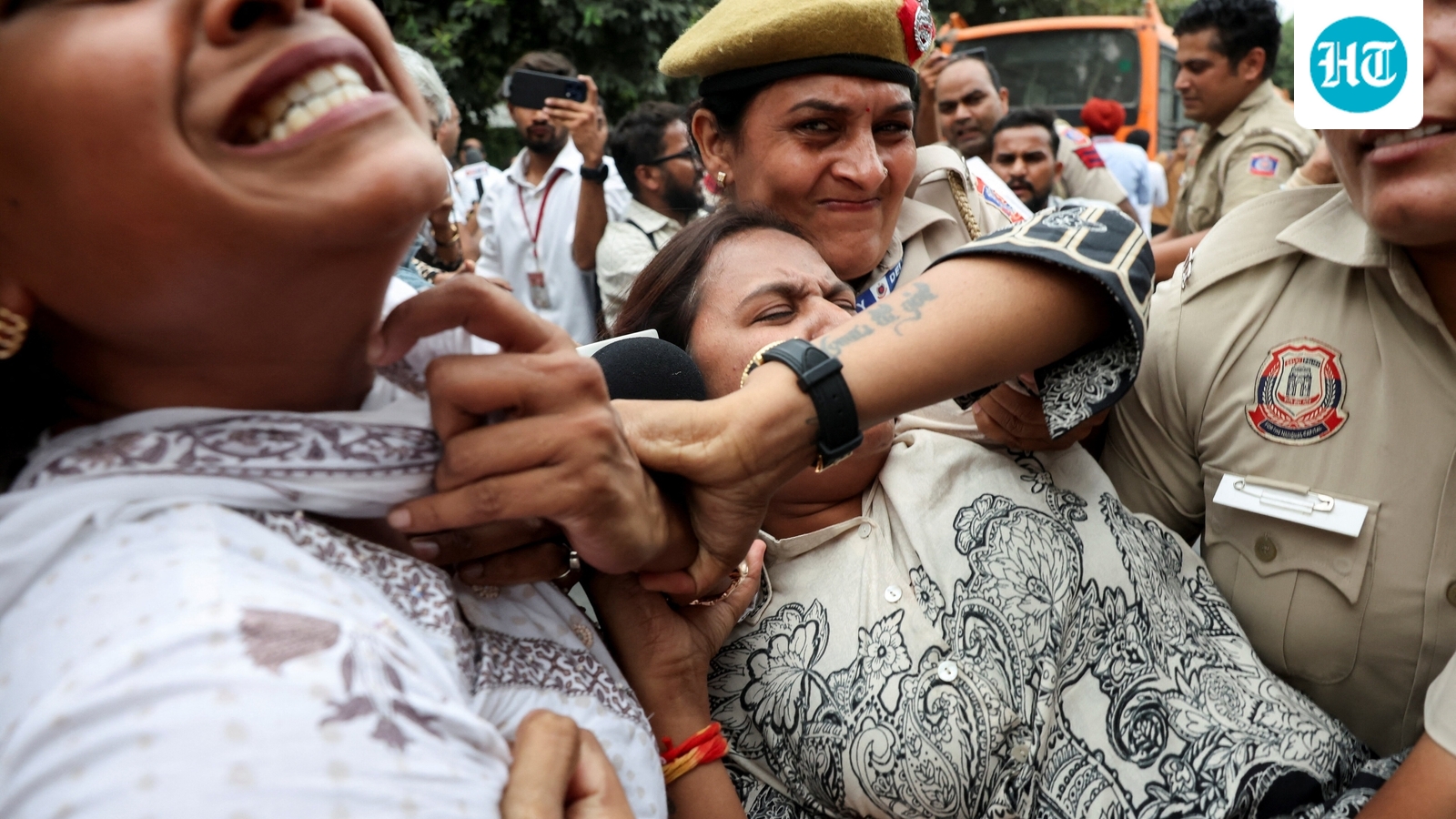
Delhi Police restrict city center access amid protests on Saturday
about 2 hours ago · 3 sources
india
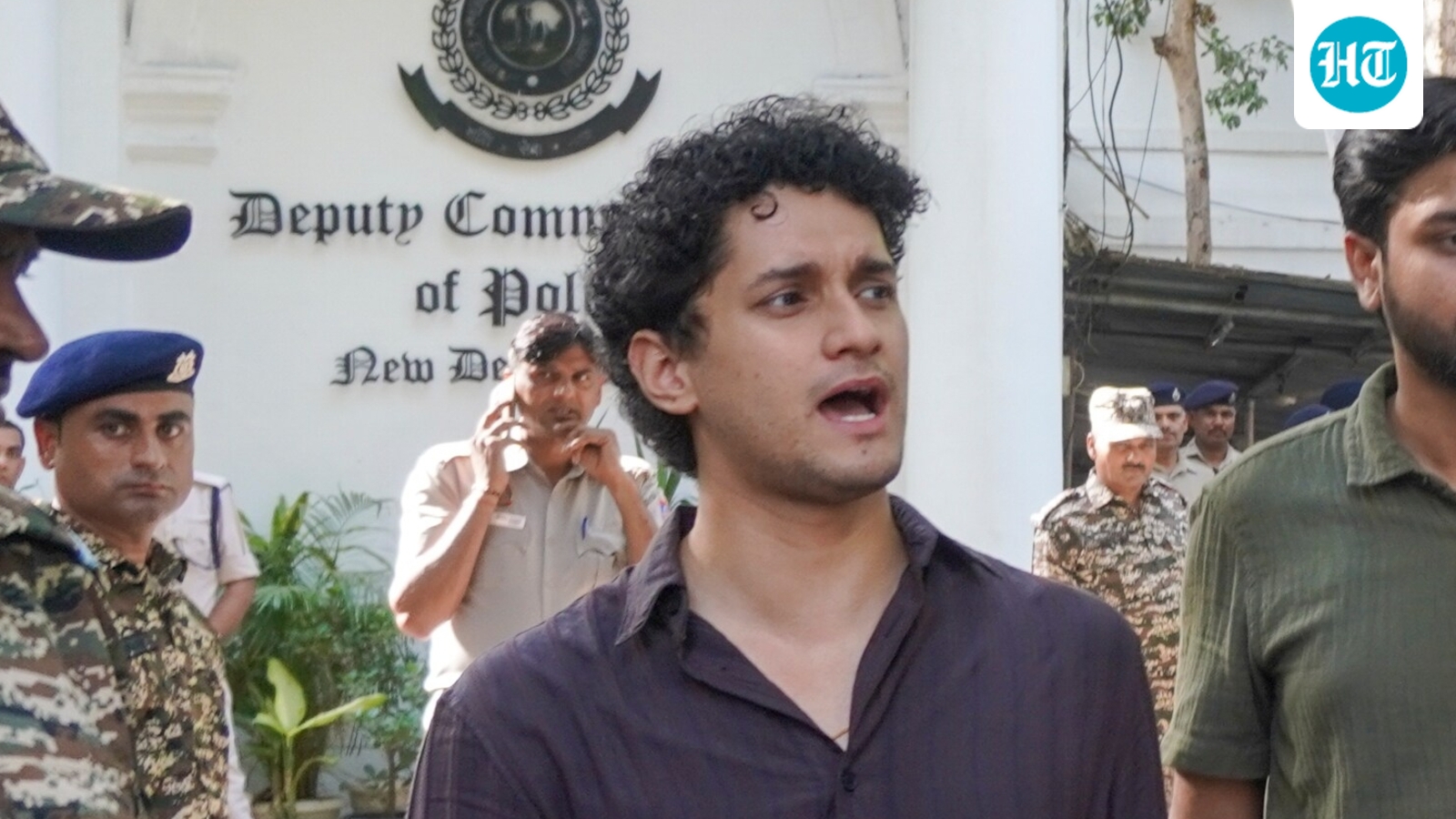
CJP Protest in Delhi Over CEC Gyanesh Kumar Leads to Curbs and Leader Detention
about 2 hours ago · 5 sources
india
Delhi Police Detain Journalists Amid Protests Despite Supreme Court Orders
about 2 hours ago · 3 sources
Discussion
Leave a comment