CJP Protest in Delhi Over CEC Gyanesh Kumar Leads to Curbs and Leader Detention
October 12, 2026 at 2:22 AM1 min read

AI Summary
The Cockroach Janta Party (CJP) organized a protest in Delhi demanding the removal of Chief Election Commissioner Gyanesh Kumar. The protest led to stringent traffic restrictions, including the closure of metro stations, shops, and cancellation of trains across the national capital. Following the protest, CJP leaders, including Saurav Das and Abhijeet Dipke, were detained by the Delhi Police. Upon their release, the leaders alleged high-handedness, claiming they were abducted, their phones were taken, and they were denied access to a lawyer.
World View
1 perspectiveIndia's perspective
Times of IndiaEconomic TimesHindustan Times
The Cockroach Janta Party (CJP) organized a protest in Delhi demanding the removal of Chief Election Commissioner Gyanesh Kumar, prompting the imposition of stringent national capital restrictions, including the closure of metro stations and shops, which were estimated to cost crores. Following the protest, CJP leaders were detained, leading them to allege that the Delhi Police acted with high-handedness, claiming they were abducted, denied access to lawyers, and had their phones seized. Politically, the leaders questioned Prime Minister Modi and Home Minister Shah, suggesting the government was creating an 'Emergency-like situation' to protect the CEC. Despite the protests and resulting disruptions, a magistrate court eventually ordered the release of the leaders, though they were placed under a one-year condition against breaching the peace.
The Hidden Strings
Patterns visible only when every country's coverage is placed side by side — the connections no single source draws.
Vocabulary
The Political Vocabulary Gap: Economic Times Outlier
100%
The Economic Times (ET) is the sole source utilizing highly charged political and social vocabulary such as 'modi', 'shah', 'alleged', 'student', and 'electoral'. This suggests that ET is framing the protest through a specific, high-level political lens, while the other major sources (PTI, TOI, HT, LiveMint) are either avoiding this political framing or have not yet incorporated these specific loaded terms.
Economic Times coverage / 'alleged'Economic Times coverage / 'student'Economic Times coverage / 'shah'Economic Times coverage / 'modi'Economic Times coverage / 'electoral'
Timing
Escalation of Narrative: From Curbs to Political Confrontation
90%
The coverage timeline demonstrates a rapid escalation of the narrative. The reporting begins with physical restrictions (PTI reporting on 'curbs'). This quickly shifts to personal allegations of police misconduct (HT and TOI focusing on 'detention' and 'phone cloning'). The narrative culminates with the most politically charged angle, where the protest is framed as a direct confrontation with national leaders (ET questioning 'Modi, Shah').
2026-10-11T09:00 India Press Trust of India (PTI): Stringent traffic curbs in Delhi as CJP protest enters second day2026-10-11T09:12 India Hindustan Times: ‘Abducted, phones taken, no lawyer’: CJP's Saurav Das alleges high-handedness by Delhi Police during detention, attacks2026-10-11T09:21 India Economic Times: CJP protest: Saurav Das questions Modi, Shah2026-10-11T09:39 India Times of India: 'Cops could plant evidence': CJP alleges 'phone cloning' in press brief - top quotes
Silence
The Omission of the Protest's Core Cause
80%
While the event title specifies the protest is 'Over CEC Gyanesh Kumar,' the subsequent narrative clusters focus almost entirely on the *consequences* of the protest (curbs, detention, allegations of police misconduct, political confrontation). The specific role or actions of Gyanesh Kumar, the stated catalyst for the protest, are not given sustained attention or detailed context across any of the major reporting clusters.
Event: CJP Protest in Delhi Over CEC Gyanesh Kumar Leads to Curbs and Leader DetentionAll narrative clusters focus on Saurav Das's allegations, police action, or political figures (Modi/Shah), rather than the details of the Gyanesh Kumar issue.
How Each Side Framed It
Press Trust of India (PTI) coverage
India
Emphasizes: Stringent traffic restrictions remained in force across several parts of Delhi on Sunday for a second consecutive day as the Cockroach Janta Party (CJP) renewed its call for protests demanding the rem
Times of India coverage
India
Emphasizes: A Delhi executive magistrate court on Sunday ordered the release of Cockroach Janta Party (CJP) leaders Abhijeet Dipke, Saurav Das and Ashutosh Ranka, on the condition that they do not engage in any "
Hindustan Times coverage
India
Emphasizes: Das and Ranka continued attack on government, saying they knew they would be detained but did not expect it to happen this way
LiveMint coverage
India
Emphasizes: To protest against CEC Gyanesh Kumar, the CJP organised a protest at Jantar Mantar on October 10, prompting the Centre and police to take pre-emptive steps to avoid a July 20-like situation
Economic Times coverage
India
Emphasizes: Cockroach Janta Party (CJP) leaders on Sunday questioned Prime Minister Narendra Modi and Union Home Minister Amit Shah over their alleged efforts to protect Chief Election Commissioner Gyanesh Kumar,
What Mainstream Coverage Missed
Angles present in the cross-border material that the dominant coverage buried or skipped.
- The specific role or actions of CEC Gyanesh Kumar, the stated catalyst for the protest, are not given sustained attention or detailed context.
- The narrative structure reveals a rapid escalation, moving from physical curfews (PTI) to personal allegations of police misconduct (HT/TOI) and culminating in direct political confrontation (ET).
- The coverage consistently focuses on the *consequences* of the protest (curfews, detentions) rather than the core political demands or the institutional context of the protest.
The Beyond the Borders PoV
The Question
Whether the Delhi Police's actions of detaining CJP leaders during the protest were necessary and proportionate given the resulting public order disruption.
The CJP organized protests demanding the removal of the Chief Election Commissioner and faced significant restrictions and legal actions.
The CJP organized protests, including one at Jantar Mantar, demanding the removal of Chief Election Commissioner Gyanesh Kumar. These protests led to stringent traffic restrictions, including the shutdown of metro stations, cancellation of trains, and temporary suspension of internet services. Following the protests, CJP leaders were released on the condition that they maintain peace and good behavior for one year, and the party stated that the protest would continue despite the detention and police action.
The CJP's primary demand during the protests was the removal of the Chief Election Commissioner.
The protests resulted in severe disruptions across Delhi, including the closure of major services and markets.
Despite the legal actions and police harassment allegations, the CJP leadership vowed to continue their agitation.
These are AI-generated arguments built from the evidence available across the source material. They do not imply that any publisher endorses either position.
Disclaimer
The summary and perspectives above are AI-generated from the source articles listed below. They may contain errors or omissions. Always verify with the original sources. Beyond the Borders is a news aggregation platform and does not produce original journalism.
How does this story make you feel?
What each source is saying
5 sourcesTheir Angle
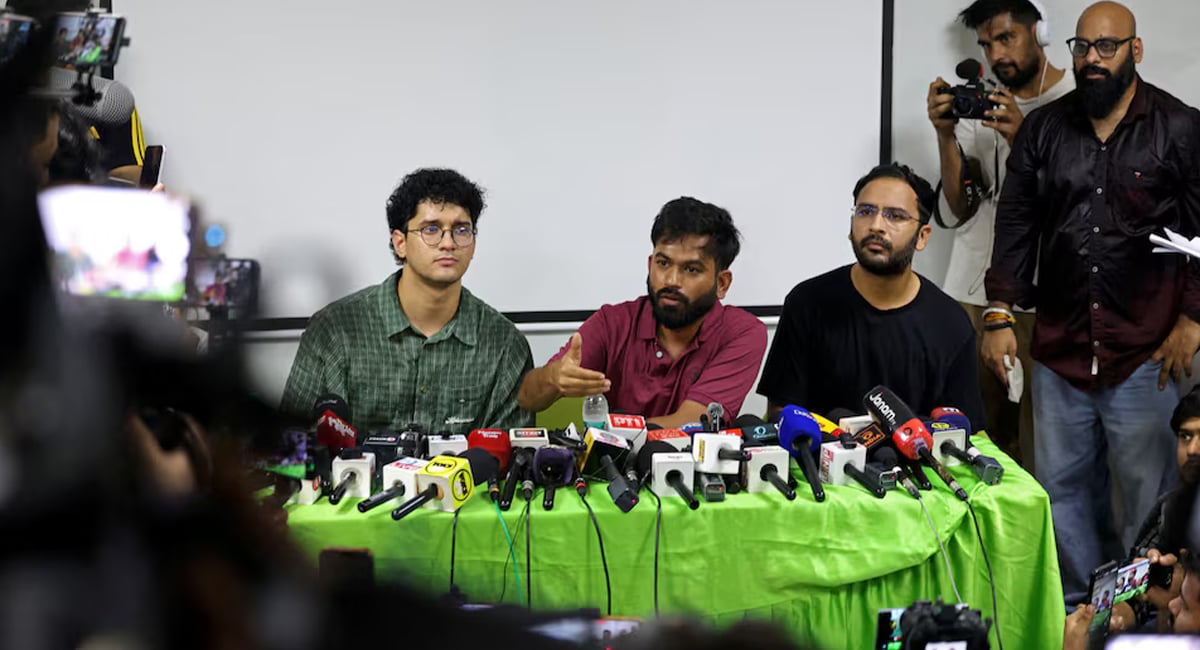
A Delhi executive magistrate court ordered the release of CJP leaders Abhijeet Dipke, Saurav Das, and Ashutosh Ranka. The release was conditional on the leaders not engaging in any breach of peace for one year.
Article Preview
A Delhi executive magistrate court on Sunday ordered the release of Cockroach Janta Party (CJP) leaders Abhijeet Dipke, Saurav Das and Ashutosh Ranka, on the condition that they do not engage in any "breach of peace for one year", the party's head of legal affairs, Ratna Singh, said. Delhi Police said a bail bond-cum-surety bond of Rs 50,000 was furnished to ensure "maintaining peace and good behaviour" for a period of one year.
More from india
india
Three CJP Leaders Released After Detention During New Delhi Protests
about 1 hour ago · 2 sources

india
Delhi Police restrict city center access amid protests on Saturday
about 1 hour ago · 3 sources
india
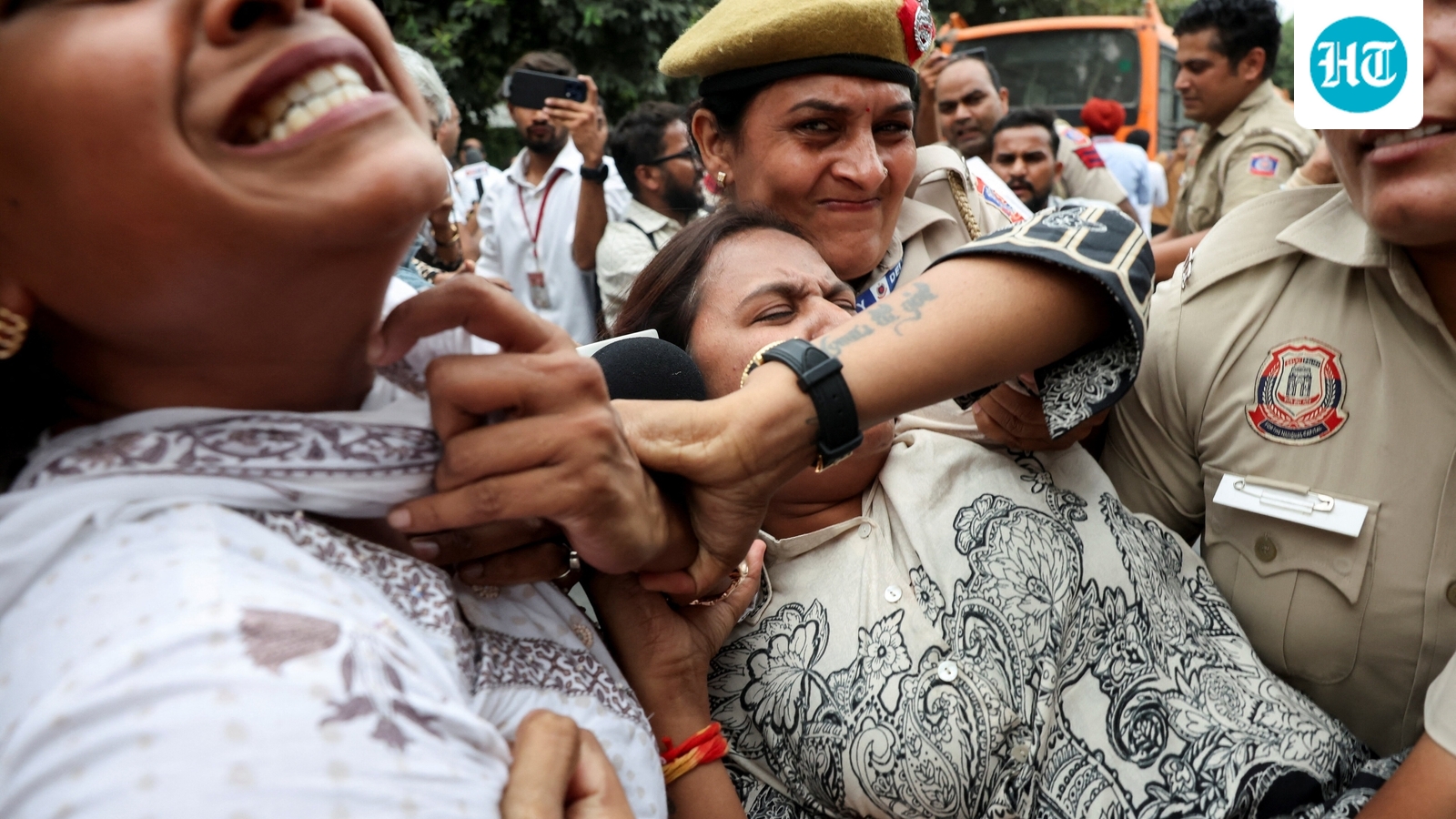
Delhi Police Detain Journalists Amid Protests Despite Supreme Court Orders
about 1 hour ago · 3 sources
Discussion
Leave a comment