US-Canada Tensions Rise Over Trade Disputes and Lake Ontario Naming
August 31, 2026 at 2:28 AM1 min read

AI Summary
Tensions are escalating between the US and Canada, encompassing both trade disputes and a disagreement over the name of Lake Ontario. The dispute intensified after US President Donald Trump signed an executive order seeking to rename the lake to Lake America. In response, Ontario Premier Doug Ford erected a sign reading "Lake Ontario - Now and Always" and criticized the US president. Furthermore, the sources note that Canada is preparing its own set of duties amid new tariffs, while an AI-generated video from Canada has become a symbol of anger toward US tariffs.
World View
2 perspectivesChina's perspective
Global Times
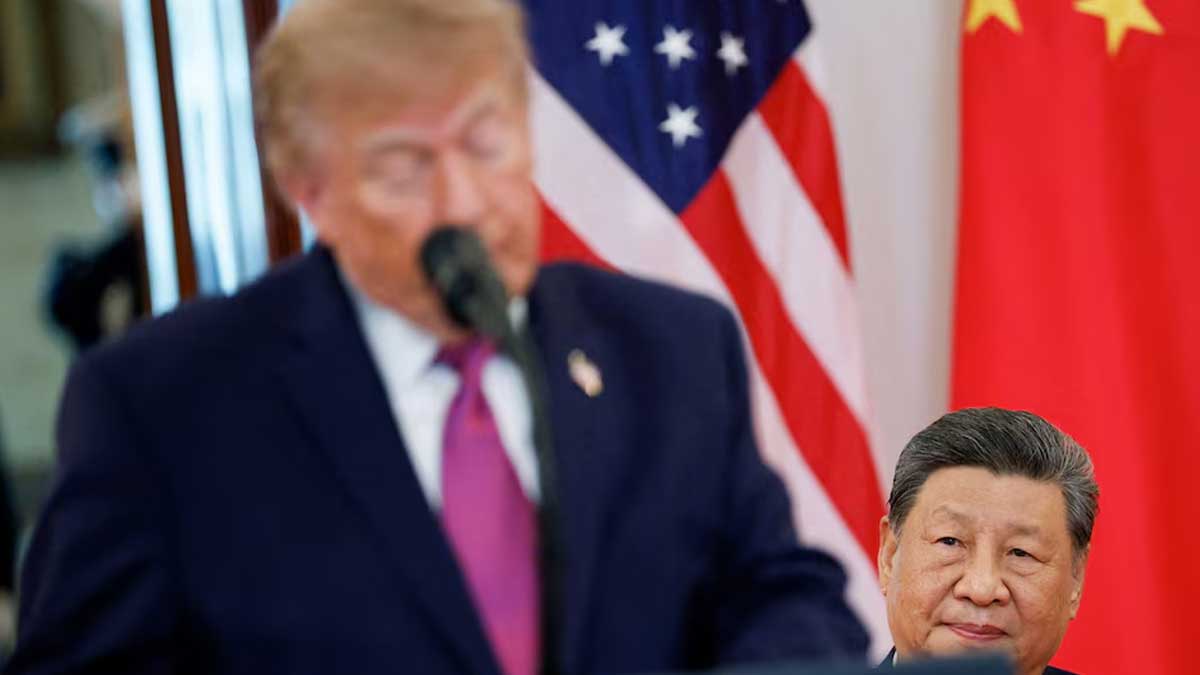
From an escalating trade war to a dispute over the naming of Lake Ontario, tensions between the US and Canada have continued to deepen. Yet some voices in the US have sought to draw China into the dispute, portraying Beijing as a potential "winner" from the widening rift.
India's perspective
Times of India
An AI-generated video from Canada features a satirical 'Resistance Army' opposing US tariffs, prompting a comeback from the United States with a striking bald eagle image. This playful yet serious exchange underscores an intensifying meme war as trade negotiations falter dramatically. Amidst new tariffs, Canada is gearing up to respond with its own set of duties, raising tensions further.
The Hidden Strings
Patterns visible only when every country's coverage is placed side by side — the connections no single source draws.
Vocabulary
The Vocabulary String: Cultural Meme War vs. Geopolitical Dispute
100%
There is a stark vocabulary contrast between the two narratives. Cluster A utilizes terms like 'meme war' and 'AI-generated video,' framing the conflict as a cultural or satirical exchange. Conversely, Cluster B relies on hard geopolitical terminology such as 'tensions simmer,' 'trade war,' and specific geographical markers like 'Lake Ontario,' suggesting an underlying economic dispute rather than a cultural one.
Cluster A: "Cultural conflict as a meme war"Cluster B: "Warning against foreign geopolitical manipulation"'meme war' used in Cluster A'dispute' used by [Warning against foreign geopolitical manipulation] but ABSENT in [Cultural conflict as a meme war]
Source
The External Commentary String: Non-Regional Amplification
95%
Both narrative clusters utilize non-primary regional sources (India and China) to comment on a core US-Canada bilateral dispute. This pattern suggests that external global powers are actively framing or amplifying the tensions between these two nations, rather than reporting solely from within North America.
Cluster A: India (Times of India) commenting on US-Canada tariffsCluster B: China (Global Times) commenting on US-Canada tensions and trade disputes
Timing
The Temporal String: Culture Precedes Geopolitics
90%
The narrative framing suggests that the cultural flashpoint was reported first, preceding the geopolitical warning. The India Times of India article (09:34) focuses on a meme war triggered by US tariffs, while the Global Times article (16:36) later frames the issue as a deeper, systemic trade and naming dispute involving Lake Ontario.
2026-08-30T09:34 India Times of India: AI-made music video becomes symbol of Canadians' anger toward US tariffs2026-08-30T16:36 China Global Times: US-Canada tensions simmer over trade row and Lake Ontario renaming, with China falsely dragged into dispute
How Each Side Framed It
Cultural conflict as a meme war
India
Neutral/Observational; highlights escalating cultural tension.
ai-generated videosatirical 'resistance army'meme warplayful yet serious exchange
Warning against foreign geopolitical manipulation
China
Pro-China; warns that external powers are destabilizing regional relations.
tensions simmerfalsely dragged into disputeescalating trade warpotential 'winner'
What Mainstream Coverage Missed
Angles present in the cross-border material that the dominant coverage buried or skipped.
- External powers are actively framing a core US-Canada bilateral dispute, with both China and India using the conflict to advance their own geopolitical narratives.
- The narrative structure suggests that external commentary (China/India) is more concerned with positioning themselves as global arbiters than reporting on the actual trade or naming disputes.
- The conflict itself has a temporal pattern: the initial flashpoint was a cultural meme war, which later served to mask an underlying, deeper economic dispute over tariffs and sovereignty.
The Beyond the Borders PoV
The Question
Should US trade policies regarding tariffs be adjusted to better account for potential retaliatory duties imposed by Canada?
US trade policies regarding tariffs must be adjusted to better account for potential retaliatory duties imposed by Canada.
Tensions between the US and Canada are already deepening due to various disputes, including a recent failure to reach a trade deal that led the US to impose significant tariffs on Canadian goods. This escalating conflict has prompted Canada to prepare its own set of duties in response to American measures. Therefore, adjusting current US policies is necessary to mitigate the predictable escalation of retaliatory actions.
The evidence shows that the initial imposition of tariffs by the US following a failed trade deal has already triggered Canada's preparation for its own set of duties; thus, preemptively adjusting US policies is necessary to manage this immediate and escalating cycle of retaliation.
The current trade dispute is already causing a growing strain between Washington and Ottawa, which risks pushing Canada to diversify its economic partners; therefore, adjusting US tariffs now could prevent this structural shift in Canadian trade reliance.
Since the US tariffs are already contributing to an intensifying, high-profile trade conflict,even manifesting as a 'meme war',adjusting policies is warranted to de-escalate tensions and prevent further economic friction.
These are AI-generated arguments built from the evidence available across the source material. They do not imply that any publisher endorses either position.
Disclaimer
The summary and perspectives above are AI-generated from the source articles listed below. They may contain errors or omissions. Always verify with the original sources. Beyond the Borders is a news aggregation platform and does not produce original journalism.
How does this story make you feel?
What each source is saying
2 sourcesTheir Angle
Tensions are deepening between the US and Canada, involving a trade war and a dispute over Lake Ontario's name. Premier Doug Ford criticized President Donald Trump after he signed an executive order to rename the lake to Lake America.
Full Article
From an escalating trade war to a dispute over the naming of Lake Ontario, tensions between the US and Canada have continued to deepen. Yet some voices in the US have sought to draw China into the dispute, portraying Beijing as a potential "winner" from the widening rift. Chinese experts, however, say that distorting risks reversing cause and effect: It is the growing strain between Washington and Ottawa that is pushing Canada to look elsewhere, rather than China driving the two longtime allies apart. In the latest move, Ontario Premier Doug Ford on Saturday erected a sign by Lake Ontario that reads "Lake Ontario - Now and Always" and criticized US President Donald Trump after he signed an executive order to rename the body of water that borders the Canadian province and the state of New York. The US president signed an executive order on Thursday seeking to change its name to Lake America and has shared a series of AI-generated videos about the lake that straddles both countries. "I'm here on the shores of beautiful Lake Ontario, a crown jewel of our province and our country," Ontario Premier Doug Ford said in a short video message posted on social media, according to CBS News. "You may have heard that President Trump is trying to rename this lake, all because he doesn't like Ontario and Canada standing up for ourselves," he said. "But let's be serious. Long before President Trump, this lake was called Lake Ontario, and long after President Trump is gone, it will still be called Lake Ontario." Canadian Prime Minister Mark Carney on Thursday hit back after Trump signed an order directing the federal government to start changing the name of Lake Ontario. He wrote that the name of the lake had nothing to do with the Canadian province of Ontario — and actually predated the formation of Canada itself. "We know that the United States is changing. Their trade relations, their foreign policy, their national monuments, their hydronyms," Carney continued. The recent dispute between the two countries began after the US and Canada failed to reach a trade deal on August 21, and the US imposed a 50 percent tariff on about $20 billion worth of Canadian goods on August 22, according to Xinhua News Agency. Canada responded by announcing "dollar-for-dollar" retaliatory tariffs on imports from the US, set to take effect on September 8. Relations between the US and Canada have deteriorated rapidly since Trump returned to office. From his repeated suggestions that Canada become the "51st state" to tensions over the US-Mexico-Canada Agreement (USMCA) and the latest escalation in tariff disputes, each confrontation has placed further strain on an already fraying relationship, Liu Dan, a research fellow at the Center for Regional and Country Studies at Guangdong University of Foreign Studies, told the Global Times. Liu said the days when Washington could expect Ottawa to simply fall in line with its demands were fading. Rather than isolated episodes, the latest disputes reflect an accumulation of tensions that is steadily eroding the foundations of US-Canada relations, she said. As relations between the US and Canada have deteriorated, some US officials and media outlets, including The Washington Post, The New York Times and Fox News, have turned their attention to China, suggesting that Beijing could emerge as a beneficiary of the trade war between the longtime allies. In an article titled "The US and Canada Are in a Trade War. China Aims to Win It," The Washington Post claimed Beijing was seeking to capitalize on the rift while presenting itself as a global champion of free trade. US Trade Representative Jamieson Greer said as much last week. Retaliatory tariffs, he claimed, are "like the kind of things that China would do," per CBC. That narrative, Liu argued, places what is fundamentally a dispute between Washington and Ottawa within the broader framework of US-China rivalry, implying that any effort by Canada to chart a course independent of Washington amounts to choosing between the two powers. Such a view, she said, seems to overlook Canada's right to pursue its own economic and trade interests as a sovereign country. Liu also questioned claims in some US media that China could emerge as the "winner" of a US-Canada trade war. If US tariffs and other pressure lead Canada to reduce its reliance on the American market and seek a wider range of trading partners, closer economic ties with China and other countries would be a natural consequence of that diversification, she said. Portraying China as the beneficiary of the dispute, Liu argued, risks reversing cause and effect: it is the growing strain between Washington and Ottawa that is pushing Canada to look elsewhere, rather than China driving the two allies apart.
More from business


PreviousbusinessIranian Official Claims US Manipulates Energy Markets via MediaNextbusinessIndia Reports 7.8% GDP Growth in First Quarter, Defying War Concerns
Discussion
Leave a comment