PHP Security Flaws Prompt Global Websites to Temporarily Shut Down
October 23, 2026 at 1:56 AM1 min read

AI Summary
Critical security flaws were discovered in PHP, a programming language powering approximately 70% of the world’s websites. The vulnerabilities were uncovered with the help of artificial intelligence, prompting developers to release emergency fixes on Wednesday. In response, governments, companies, and major online services in several countries temporarily shut down websites and systems as a precaution. Cybersecurity authorities urged organizations to update affected systems immediately or take them offline until they could be secured. Furthermore, South Korea's science ministry raised its cybersecurity alert level following the global security concerns.
World View
2 perspectivesEU's perspective
Euronews
The discovery of critical security flaws in PHP, a language powering about 70% of global websites, prompted immediate global action. Cybersecurity authorities advised organizations to either update affected systems or take them offline until they could be secured. The vulnerabilities, which were found with the help of artificial intelligence, led governments and major online services in several countries to temporarily shut down websites as a precaution. The severity of the flaws was rated highly, and while initial reports suggested little widespread exploitation, detected attempted attacks increased global concern about unpatched systems.
South Korea's perspective
Yonhap News
Critical security flaws were discovered in PHP, a programming language powering approximately 70% of the world’s websites. The vulnerabilities were uncovered with the help of artificial intelligence, prompting developers to release emergency fixes on Wednesday. In response, governments, companies, and major online services in several countries temporarily shut down websites and systems as a precaution. Cybersecurity authorities urged organizations to update affected systems immediately or take them offline until they could be secured. Furthermore, South Korea's science ministry raised its cybersecurity alert level following the global security concerns.
The Hidden Strings
Patterns visible only when every country's coverage is placed side by side — the connections no single source draws.
Vocabulary
The Vocabulary String: Authority vs. Collapse
100%
The narrative is split between high-level governmental language and visceral technical description. Cluster A uses abstract terms like 'global security concerns' and 'raises cybersecurity alert level,' framing the event as a matter of official risk management. Conversely, Cluster B uses concrete, dramatic terms such as 'websites go dark' and 'major programming language security flaw,' focusing entirely on the immediate, physical manifestation of digital failure.
Yonhap News: raises cybersecurity alert level, global security concernsEuronews: websites go dark, major programming language security flawVocabulary Contrast: 'raises cybersecurity alert level' vs. 'websites go dark'
Silence
The Silence on Causality and Scale
95%
Both clusters exhibit a critical omission regarding the full scope of the crisis. Cluster A, while warning of global concerns, is silent on the actual technical mechanism or the scale of the failure (i.e., they do not mention 'websites go dark'). Cluster B, while detailing the technical flaw, is silent on the official governmental warning or the geopolitical response, allowing the collapse to appear purely systemic rather than a reaction to a known risk.
Cluster A: Absence of 'websites go dark' or technical flaw detailCluster B: Absence of 'raises cybersecurity alert level' or official warning
Timing
The Narrative Progression: Warning Precedes Impact
90%
The timeline establishes a clear sequence of reporting, suggesting a narrative arc. The official warning (Cluster A) is reported first (07:55), establishing the threat's existence and the need for caution. The dramatic consequence (Cluster B) is reported nearly an hour later (08:47), suggesting the narrative is designed to move from abstract warning to concrete, visible failure.
2026-10-22T07:55 South Korea Yonhap News2026-10-22T08:47 EU Euronews
Frame Inversion
The Locus of Control: National Authority vs. Global Systemic Failure
85%
The reporting frames the crisis differently based on the source's focus. Cluster A centers the narrative on national authority and localized response (South Korea, 'alert level'), implying that the problem can be managed by official bodies. Cluster B, conversely, frames the event as an uncontrollable, global systemic failure (EU, 'websites go dark'), suggesting that national or governmental control is irrelevant in the face of pure digital collapse.
Cluster A: South Korea, Yonhap News, 'raises cybersecurity alert level'Cluster B: EU Euronews, 'websites go dark', 'major programming language security flaw'
How Each Side Framed It
Governmental warning and official response
South Korea
Favors government authorities, emphasizing necessary caution and official action.
raises cybersecurity alert levelglobal security concerns
Systemic failure and digital collapse
EU
Focuses on the immediate, visible disruption and vulnerability of global infrastructure.
websites go darkmajor programming language security flawshut down websites
What Mainstream Coverage Missed
Angles present in the cross-border material that the dominant coverage buried or skipped.
- The structural timing of the crisis is being ignored: the official governmental warning (South Korea) was reported nearly an hour before the dramatic, visible consequence (EU).
- The core conflict is not technical, but jurisdictional: the tension between national authority (South Korea's alert levels) and uncontrollable global systemic failure (EU's description of digital collapse).
- The narratives consistently fail to connect the technical flaw (PHP) to the geopolitical response, treating the crisis as purely technical rather than a matter of global infrastructure vulnerability.
The Beyond the Borders PoV
The focus on national alerts and official fixes is a calculated distraction from the fact that the crisis is fundamentally one of systemic, unmanageable global fragility.
The contrast between South Korea's emphasis on official 'alert levels' and the EU's depiction of 'systemic failure' reveals a critical pattern. Governments are incentivized to frame the crisis as a manageable risk, allowing them to assert control. However, the silence on the actual scale of the failure, coupled with the dramatic timing of the collapse, suggests that official warnings are designed to manage perception, not reality. The pattern suggests that national authority is being leveraged to distract from the fact that the underlying digital infrastructure is inherently uncontrollable. The true story is not about who fixes the flaw, but who benefits from the appearance of control during a global systemic breakdown.
This is our editorial interpretation of the cross-source evidence above, not a report of established fact. The sourced coverage it draws on is listed below.
Disclaimer
The summary and perspectives above are AI-generated from the source articles listed below. They may contain errors or omissions. Always verify with the original sources. Beyond the Borders is a news aggregation platform and does not produce original journalism.
How does this story make you feel?
What each source is saying
2 sourcesTheir Angle
Government agencies and companies around the world shut down websites Wednesday after two critical flaws came to light involving PHP, a programming language that is the basis for a large share of the internet.
Full Article
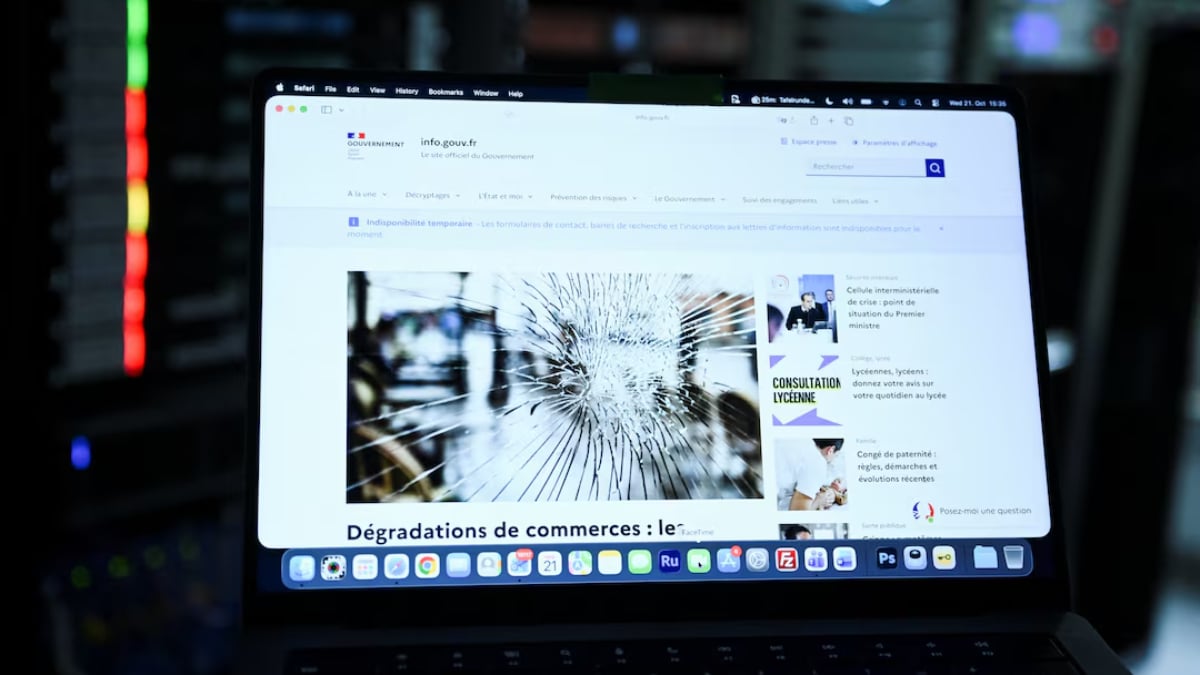
Critical security flaws have been discovered in PHP, a widely used programming language that helps power around 70% of the world’s websites. Developers released emergency fixes on Wednesday, while cybersecurity authorities urged organisations to update affected systems immediately or take them offline until they could be secured. The warning prompted governments, companies and major online services in several countries to temporarily shut down websites and other systems as a precaution. The vulnerabilities were uncovered with the help of artificial intelligence. Security firm Calif identified one of the flaws in August during an OpenAI-funded audit of PHP, while Google-owned cybersecurity company Wiz independently discovered and reported both vulnerabilities. OpenAI said its GPT-5.6 Sol model was used in the Calif research. The PHP security team rated both vulnerabilities 9.2 out of 10 for severity. Details were meant to remain confidential while developers prepared fixes, but information about the flaws emerged publicly before the planned release, intensifying the race to secure vulnerable systems. Security researchers initially reported little evidence of widespread exploitation before the vulnerabilities became public. However, attempted attacks have since been detected, increasing concern that unpatched systems could be targeted. Websites and services taken offlineThe Wikimedia Foundation, which operates Wikipedia, said it deliberately took a number of supporting services offline while security updates were installed and warned users that some disruption could occur. Amazon Threat Intelligence also detected attempts to exploit the vulnerabilities, including activity before their public disclosure. Security researchers have since reported attempts to target vulnerable systems in the wild. Several European governments have also taken precautionary action. France’s Interior Ministry temporarily took prefecture websites offline while updates were applied, while Germany’s federal IT provider ITZBund shut down several government websites. German officials said the move was precautionary and that no security incidents had been identified. Government and public-service websites were also taken offline in countries including the Netherlands and Finland, as authorities worked to secure their systems. In the UK, the National Cyber Security Centre urged organisations running PHP to identify vulnerable systems, monitor them for suspicious activity and install security updates as soon as possible.
More from world

world
Four police personnel martyred in Karak terrorist attack; two terrorists killed
about 8 hours ago · 2 sources

world
Global Websites Temporarily Offline Amid Critical PHP Vulnerability Patches
about 8 hours ago · 6 sources
world
PHP Vulnerabilities Force European Websites Offline
about 8 hours ago · 2 sources
Discussion
Leave a comment