Delhi Air Quality Declines to Poor Category Following Dussehra Haze
October 21, 2026 at 2:18 PM1 min read
AI Summary
Delhi recorded poor air quality on Wednesday, following a thick layer of haze that engulfed parts of the national capital after overnight Dussehra celebrations. Data from the Central Pollution Control Board showed the Air Quality Index (AQI) had surged significantly. At 10:00 AM, the national capital's AQI reached 238, marking a jump of 59 points from Tuesday's reading of 179. Two locations, Jahangirpuri and Pusa, registered very poor air quality levels, with Pusa recording an AQI of 314. Environmental officials attributed the decline to seasonal weather shifts, including falling temperatures and fluctuating wind speeds, which hinder pollutant dispersion.
World View
1 perspectiveIndia's perspective
Economic TimesScroll.in
Delhi recorded poor air quality on Wednesday, following a thick layer of haze that engulfed parts of the national capital after overnight Dussehra celebrations. Data from the Central Pollution Control Board showed the Air Quality Index (AQI) had surged significantly. At 10:00 AM, the national capital's AQI reached 238, marking a jump of 59 points from Tuesday's reading of 179. Two locations, Jahangirpuri and Pusa, registered very poor air quality levels, with Pusa recording an AQI of 314. Environmental officials attributed the decline to seasonal weather shifts, including falling temperatures and fluctuating wind speeds, which hinder pollutant dispersion.
The Hidden Strings
Patterns visible only when every country's coverage is placed side by side — the connections no single source draws.
Vocabulary
The Vocabulary String: Status vs. Source
95%
The clusters employ fundamentally different vocabularies to describe the event. Cluster A uses technical, governmental language ('worsens', 'poor category', 'measures to curb pollution') focusing on the current status and official response. Conversely, Cluster B uses evocative, causal language ('dussehra haze', 'engulfed', 'overnight celebrations') that assigns blame and describes the origin of the poor air quality.
Cluster A: 'worsens', 'poor category', 'measures to curb pollution'Cluster B: 'dussehra haze', 'engulfed', 'overnight celebrations'
Timing
The Timing String: Status First, Cause Second
90%
The publication timeline suggests a staggered narrative build. The Scroll.in article (03:50) reports the immediate status,that the air quality has worsened,before the Economic Times article (05:57) links the decline to a specific, external cause (Dussehra haze). This suggests the official status report preceded the detailed causal analysis.
2026-10-21T03:50 India Scroll.in: Delhi air quality worsens to ‘poor’ category2026-10-21T05:57 India Economic Times: Dussehra haze hangs over Delhi as AQI turns poor
Silence
The Silence String: Emotional Scale vs. Technical Metric
85%
Cluster B carries a highly descriptive and emotional scale of the crisis, using words like 'engulfed', 'city', and 'capital' to localize the impact. Cluster A, however, completely omits this emotional scope, relying solely on dry, technical metrics ('poor category', 'index') and official governmental action, thereby minimizing the perceived scale of the crisis.
Cluster B: 'engulfed', 'capital', 'city'Cluster A: 'poor category', 'measures to curb pollution'
How Each Side Framed It
Focus on official government solutions
India
Favors the government's authority and planned solutions.
worsenspoor categorymeasures to curb pollutionchief minister
Celebration fallout causes air pollution
India
Highlights the environmental impact resulting from cultural events.
dussehra hazeengulfedpoor air quality dayovernight celebrations
What Mainstream Coverage Missed
Angles present in the cross-border material that the dominant coverage buried or skipped.
- The structural pattern of the narrative build, where the immediate, alarming status report (AQI reading) consistently precedes the detailed, external causal analysis (Dussehra haze).
- The consistent omission of the emotional scale of the crisis, where technical metrics ('poor category') are used to neutralize the evocative language ('engulfed', 'city') used elsewhere.
- The simultaneous framing of the crisis as both a cultural fallout and a governmental challenge, forcing the narrative to acknowledge blame while immediately pivoting to official solutions.
The Beyond the Borders PoV
The media's dual framing,blaming cultural events while promoting government solutions,is designed to manage public outrage rather than address systemic pollution.
The persistent oscillation between assigning blame and promoting solutions reveals a core incentive: narrative control. By emphasizing the 'celebration fallout,' the media successfully localizes the crisis's origin, creating a clear culprit. However, the immediate pivot to 'official government solutions' and technical metrics minimizes the emotional scale of the disaster. This pattern suggests that the institutional priority is not solving the underlying pollution problem, but rather maintaining the authority of the state. The constant need to frame the crisis as a 'manageable' technical issue, rather than a systemic failure, benefits those who control the official narrative and the policy response.
This is our editorial interpretation of the cross-source evidence above, not a report of established fact. The sourced coverage it draws on is listed below.
Disclaimer
The summary and perspectives above are AI-generated from the source articles listed below. They may contain errors or omissions. Always verify with the original sources. Beyond the Borders is a news aggregation platform and does not produce original journalism.
How does this story make you feel?
What each source is saying
2 sourcesTheir Angle
The national capital recorded its first poor air quality day of the season on Wednesday, with the AQI surging to 238 at 10:00 AM. Two locations, Jahangirpuri and Pusa, entered the very poor category, registering AQI levels of 308 and 314. Officials attributed the decline to seasonal weather shifts, including falling temperatures and fluctuating wind speeds.
Full Article
New Delhi: The national capital recorded its first poor air quality day of the season here on Wednesday morning, as a thick layer of haze engulfed parts of the city following overnight Dussehra celebrations. According to data from the Central Pollution Control Board (CPCB), Delhi's Air Quality Index (AQI) surged to 238 at 10:00 AM. The sudden spike marks a significant jump of 59 points from Tuesday afternoon's reading of 179. Also Read: Delhi Air Quality Index average between January-May 2026 lowest in 8 years barring 2020: Commission for Air Quality ManagementAccording to CPCB data from 56 of Delhi's 59 monitoring stations, two locations-Jahangirpuri and Pusa-entered the very poor air quality category, registering AQI levels of 308 and 314, respectively. Meanwhile, 16 stations, including Anand Vihar, maintained air quality in the moderate category. Environmental officials attributed the decline to seasonal weather shifts, including falling temperatures and fluctuating wind speeds, which hinder the dispersion of airborne pollutants and lead to atmospheric accumulation. The reading marks Delhi's first instance of poor air quality since July 12 and 13, when the city recorded AQIs of 261 and 246, respectively. Air quality had remained mostly in the moderate band throughout October, aided by light rain on October 12 and 16. Over recent days, the AQI stood at 187 on October 18, 139 on October 19, and 179 at 4:00 PM on Tuesday. Under CPCB guidelines, an AQI between 0 and 50 is categorised as good, 51 to 100 as satisfactory, 101 to 200 as moderate, 201 to 300 as poor, 301 to 400 as very poor, and 401 to 500 as severe. On October 5, the air quality in the national capital deteriorated to the higher end of the 'Moderate' category, recording an Air Quality Index (AQI) of 187, marking the highest level seen in nearly three months (83 days), according to the Central Pollution Control Board's (CPCB) 24-hour bulletin. Also Read: DPCC floats tenders for pollution-control technologies at 40 Delhi sitesData from the pollution control board showed that particulate matter 10 (PM10) remained the prominent pollutant across the city, based on readings compiled from 43 out of 46 active ambient air quality monitoring stations in the capital. An AQI between 101 and 200 is categorised as 'Moderate', which the CPCB notes can cause breathing discomfort to people with lung, asthma, and heart diseases. The statement came ahead of the winter season, when Delhi-NCR generally witnesses a deterioration in air quality due to multiple factors, including meteorological conditions and emission sources.
More from india
india
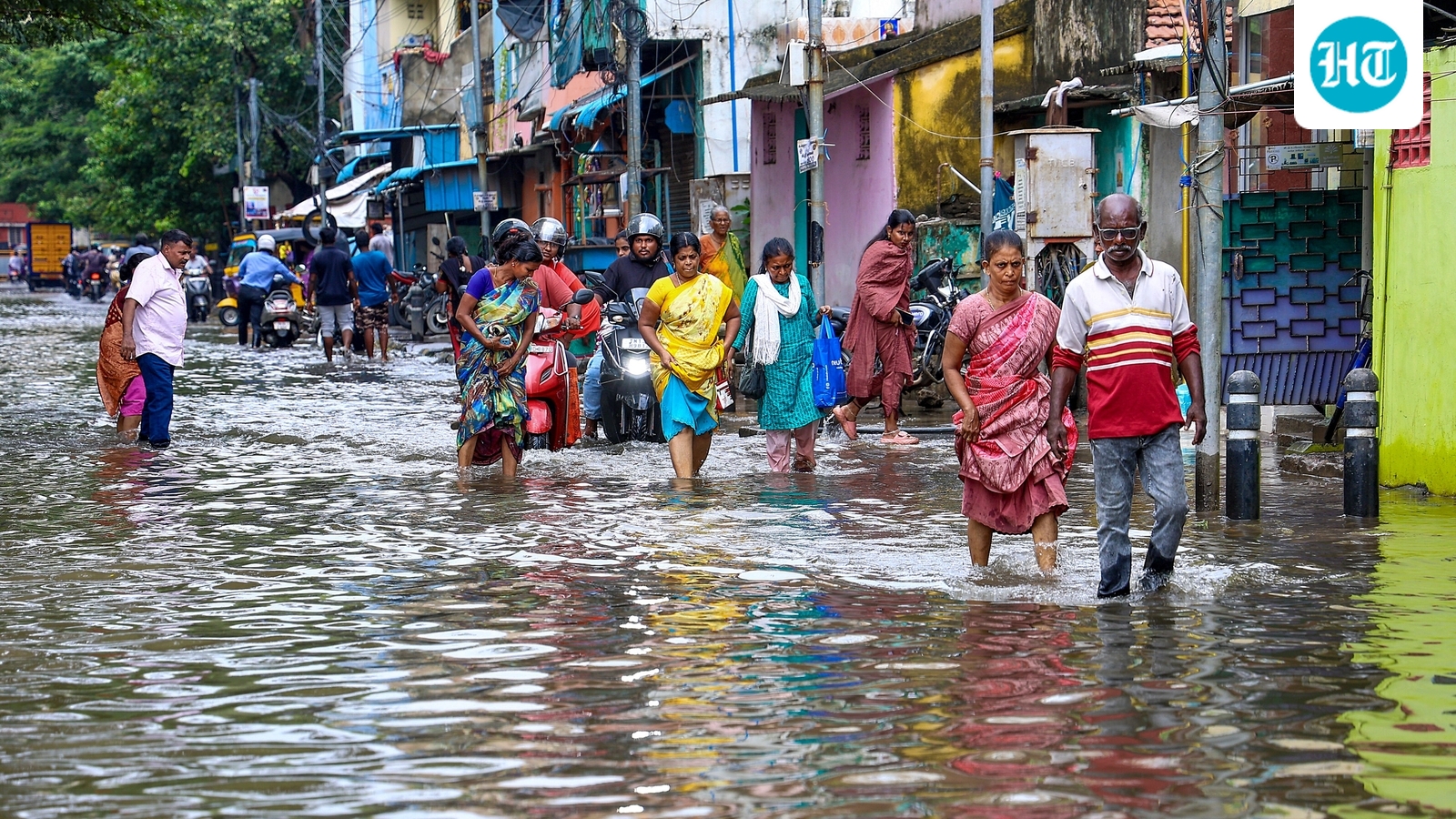
Heavy Rainfall Leads to School Closures Across Multiple Tamil Nadu Districts
about 5 hours ago · 2 sources

india
Bhagwant Mann fined Rs 50,000 at Delhi Airport Over Undeclared Goods
about 5 hours ago · 2 sources

india
Congress Criticizes BJP Over Failure to Restore Peace in Manipur
about 5 hours ago · 2 sources
Discussion
Leave a comment