indiaCovered by 3 Sources
30-Foot Cockroach Effigy Burned During Delhi Dussehra Celebrations
October 21, 2026 at 2:06 AM1 min read

AI Summary
During Dussehra celebrations in Delhi, a 30-foot cockroach effigy was burned alongside traditional effigies of Ravan. The Shri Keshav Ramlila Committee in Pitampura stated the cockroach symbol was meant to promote cleanliness under the Swachh Bharat and Swachh Delhi campaigns. However, both the internet and Abhijeet Dipke suggested the effigy was a dig at a pressure group. The event triggered a war of words between AAP and BJP, with one source noting that the festival is a highly sacred event governed by ancient Hindu rituals.
World View
1 perspectiveIndia's perspective
NDTVThe HinduTimes of India
Tuesday evening, the 30-ft cockroach effigy burned alongside those of Ravana. , suggesting the move provided them with free publicity.
The Hidden Strings
Patterns visible only when every country's coverage is placed side by side — the connections no single source draws.
Vocabulary
The Sacred vs. The Sanitary Vocabulary Clash
100%
The reporting reveals a fundamental semantic conflict: Cluster A frames the event using terms like 'sacred event' and 'ancient hindu rituals,' emphasizing religious violation. Conversely, Cluster B completely reframes the same object using vocabulary such as 'symbolized filth' and 'promoted cleanliness,' effectively replacing religious meaning with public health messaging. This stark contrast highlights the immediate attempt to delegitimize the event's cultural significance.
sacred event / ancient hindu rituals / hurting of religious sentiments (Cluster A)symbolized filth / promoted cleanliness / health awareness initiatives (Cluster B)
Frame Inversion
The Event as a Political Commodity
95%
The narrative consistently shifts the focus away from the physical act of burning the effigy. Cluster A treats it as a religious transgression, while Cluster B treats it as a policy symbol. However, Cluster C consistently frames the entire incident,regardless of its initial cause,as a source of 'free publicity' and 'political commentary.' This suggests the primary outcome, across all narratives, is the media attention itself, rather than the religious or sanitary message.
deliberate alteration / hurting of religious sentiments (Cluster A)political spectacle / promoted cleanliness (Cluster B)free publicity / political commentary (Cluster C)
Timing
The Narrative Escalation Timeline
90%
The publication timeline shows a rapid, three-stage narrative escalation. The initial report (TOI) frames the event politically and around health messaging. This is immediately followed by a report (The Hindu) that dramatically escalates the conflict to a religious outrage. Finally, the last report (NDTV) pulls back from the conflict, offering a meta-commentary on the media's role, suggesting the conflict itself was merely a source of 'free publicity.'
2026-10-20T16:45 India Times of India: Delhi BJP leader burns cockroach effigy; Dipke responds with SRK’s 'Swades' song2026-10-20T18:30 India The Hindu: 30-foot-high cockroach effigy triggers AAP-BJP war of words2026-10-20T18:53 India NDTV: 'Thank You For Free Publicity': Abhijeet Dipke On Cockroach Effigy In Delhi
How Each Side Framed It
Violation of sacred religious traditions
India
Favors the preservation of ancient religious customs and rituals.
deliberate alterationsacred eventancient hindu ritualshurting of religious sentiments
Political spectacle and public health messaging
India
Presents the event as a political spectacle with a stated, non-religious purpose.
symbolized filthpromoted cleanlinesshealth awareness initiativespolitical spectacle
Focus on political fallout and media attention
India
Neutral/Observational, focusing on the political commentary surrounding the event.
free publicitypolitical commentaryeffigy burned
What Mainstream Coverage Missed
Angles present in the cross-border material that the dominant coverage buried or skipped.
- The initial stated purpose of the effigy, promoting cleanliness under Swachh Bharat, is consistently overshadowed by the political fallout, suggesting the public health message is secondary to the political spectacle.
- The conflict is not a single debate, but a staged narrative escalation: the event moved rapidly from a policy discussion (cleanliness) to a religious outrage, and finally to a meta-commentary on media attention.
- The core conflict is not between 'sacred' and 'sanitary,' but between two competing political incentives: those who benefit from framing the event as a religious violation, and those who benefit from framing it as a political commodity.
The Beyond the Borders PoV
The Question
The use of symbolic effigies in public religious festivals, such as the burning of a cockroach effigy during Dussehra, should be interpreted as a modern, secular campaign promoting public hygiene (Swachh Bharat/Swachh Delhi) rather than a traditional religious ritual.
The use of symbolic effigies in public religious festivals, such as the burning of a cockroach effigy during Dussehra, should be interpreted as a modern, secular campaign promoting public hygiene rather than a traditional religious ritual.
The burning of a 30-foot cockroach effigy occurred during Dussehra celebrations in Delhi, alongside traditional effigies of Ravan. Organizers explicitly stated that the effigy symbolized filth and promoted cleanliness, aligning with Swachh Bharat and Swachh Delhi campaigns. This explicit framing suggests the event's primary intent is to leverage a major cultural moment for a secular public health message.
The explicit claims made by the Shri Keshav Ramlila Committee that the cockroach symbolizes filth and aims to promote cleanliness demonstrate a clear, stated objective that aligns with modern public hygiene campaigns, suggesting the event's interpretation is secular.
The timing and context of the effigy burning,during a major festival like Dussehra,shows that the event is strategically utilizing a high-visibility cultural platform to disseminate a secular message, which is a key characteristic of modern public awareness campaigns.
The fact that the effigy's symbolism (filth/chaos) was explicitly linked to cleanliness initiatives and public sentiment, as noted by figures like Kapil Mishra, indicates that the interpretation of the effigy is being framed through a modern, civic lens rather than solely through traditional religious symbolism.
These are AI-generated arguments built from the evidence available across the source material. They do not imply that any publisher endorses either position.
Disclaimer
The summary and perspectives above are AI-generated from the source articles listed below. They may contain errors or omissions. Always verify with the original sources. Beyond the Borders is a news aggregation platform and does not produce original journalism.
How does this story make you feel?
What each source is saying
3 sourcesTheir Angle
The Shri Keshav Ramlila Committee maintained the cockroach symbol promoted cleanliness under Swachh Bharat and Swachh Delhi. However, Abhijeet Dipke and the internet believed the effigy was a dig at a pressure group.
Article Preview
On Tuesday evening, the 30-ft cockroach effigy burned alongside those of Ravana.
More from india
india
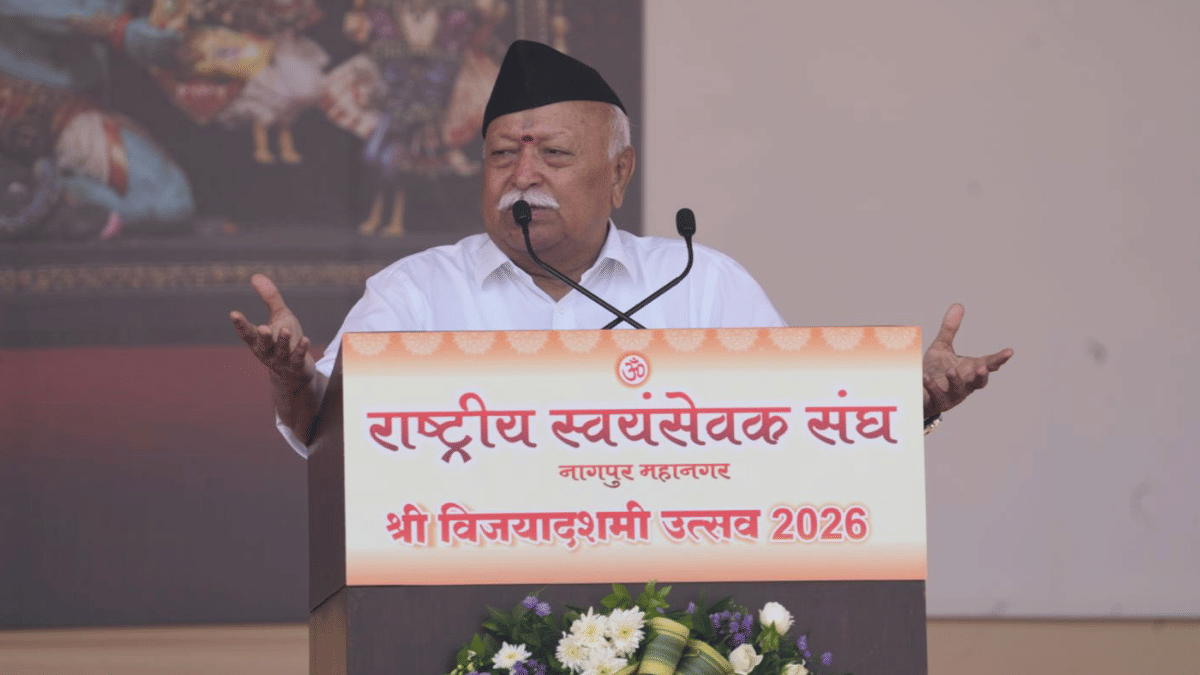
RSS Chief Bhagwat Warns of External Forces Seeking to Destabilize India
about 5 hours ago · 2 sources

india
Gujarat proposes allotting disputed Vadodara plot to Yusuf Pathan
about 5 hours ago · 2 sources

india
CJP Seeks Urgent Delhi High Court Hearing for Saurav Das and Ashutosh Ranka
about 5 hours ago · 2 sources
Discussion
Leave a comment