Stampede at Kolkata Durga Puja Pandal Kills Dozens, Injures Many
October 18, 2026 at 2:01 AM1 min read

AI Summary
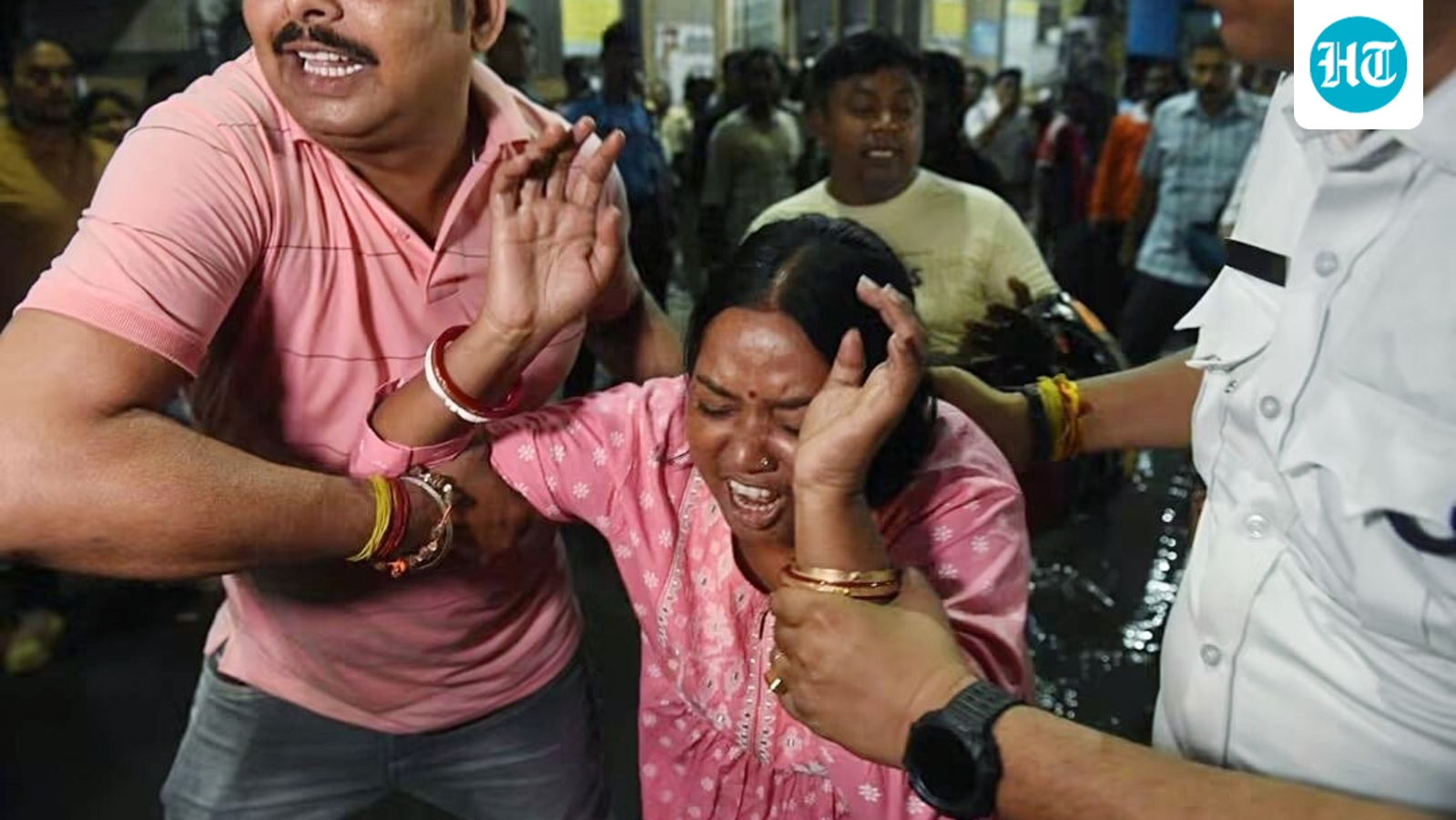
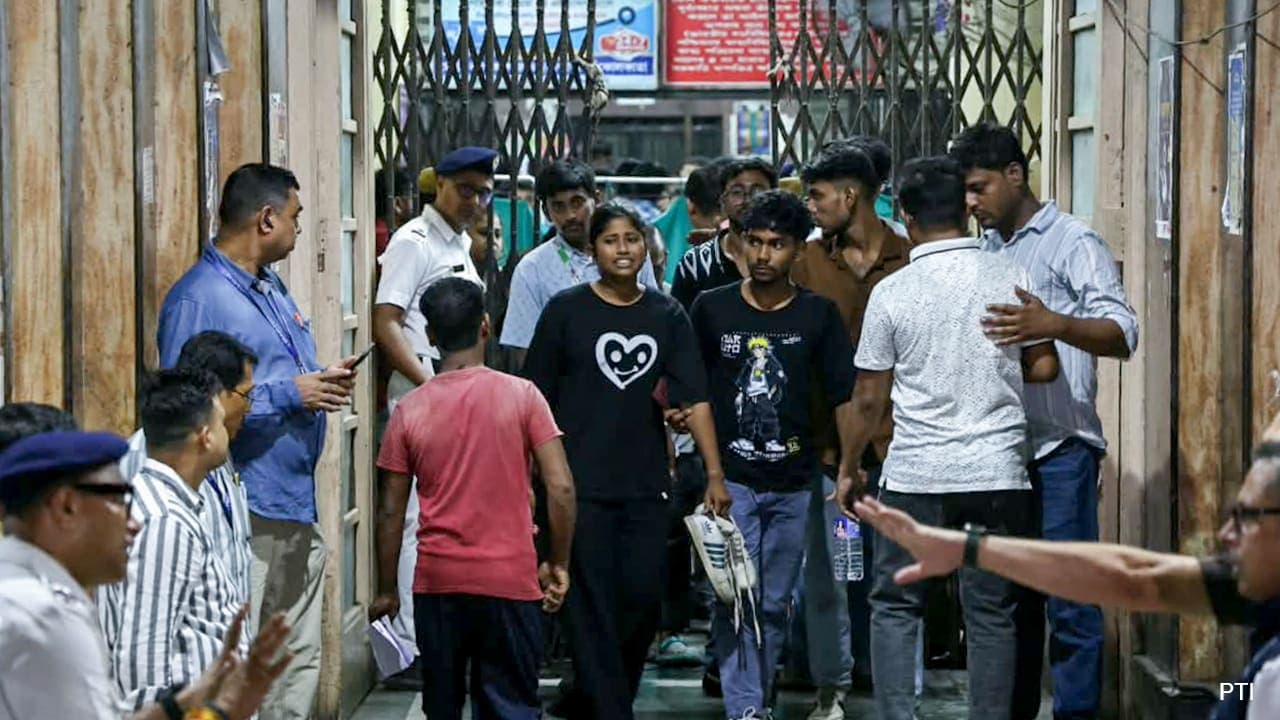
A stampede occurred on Saturday at the Durga Puja pandal in Kolkata, West Bengal, during a Hindu religious gathering. West Bengal Chief Minister Suvendu Adhikari stated that the incident resulted in at least 19 people killed and 25 others injured. The fatalities reportedly included a seven-year-old girl. According to Adhikari, the stampede happened outside a pavilion. While sources agree on the location and nature of the event, the reported death toll varies between 17 and 19 people. Authorities stated that six bodies had been identified at the scene.
World View
3 perspectivesIndia's perspective
Press Trust of India (PTI)
, West Bengal Chief Minister Suvendu Adhikari.
China's perspective
South China Morning Post
The South China Morning Post reported that a stampede occurred during a Hindu religious gathering in Kolkata, West Bengal, in eastern India. According to West Bengal’s Chief Minister Suvendhu Adhikari, at least 19 people were killed and 25 others were injured. The article notes that the stampede happened outside a pavilion and that the reported fatalities included a seven-year-old girl. It also mentions that six bodies had been identified at the scene, providing details about the event's location and the official casualty figures.
Pakistan's perspective
Dawn
At least 17 people were killed and two dozen more injured on Saturday in eastern India after a stampede that was likely caused by sudden rainfall during a Hindu religious gathering, officials said. West Bengal’s Chief Minister Suvendhu Adhikari told reporters the fatalities included a seven-year-old girl, adding that 25 others were injured outside a pavilion “in a stampede” at the Hindu festival of Durga Puja in the city of Kolkata. “Six bodies have so far been identified,” Adhikari said.
The Hidden Strings
Patterns visible only when every country's coverage is placed side by side — the connections no single source draws.
Frame Inversion
The String of Causation: Natural Disaster vs. Official Incident
95%
The narrative framing of the stampede shifts dramatically across clusters. Cluster A attributes the event to 'natural causes' and 'sudden rainfall,' suggesting an environmental trigger. Conversely, Cluster B, the official Indian report, focuses on the institutional response and official announcements, implying a managed or contained incident. Cluster C remains purely descriptive, avoiding any mention of cause.
Cluster A: 'natural causes', 'sudden rainfall'Cluster B: 'officials announced', 'CM'Cluster C: (Absence of causal vocabulary)
Vocabulary
The Gradient of Specificity: From Hyper-Local to Global Observation
90%
The level of detail regarding location and institutional involvement decreases sharply across the clusters. Cluster B is hyper-specific, naming 'Chorbagan Durga Puja pandal' and 'Kolkata medical college.' Cluster A is moderately specific to 'Kolkata.' Cluster C, the foreign observation, uses only general, broad terms like 'India religious festival' and 'eastern India,' demonstrating a deliberate lack of granular detail.
Cluster B: 'chorbagan durga puja pandal', 'rushed to the kolkata medical college'Cluster A: 'Kolkata'Cluster C: 'India religious festival', 'eastern india'
Timing
The Narrative Control String: Delayed Official Confirmation
90%
The timeline reveals a pattern of narrative control. The initial report comes from Pakistan (Dawn) at 19:36, establishing a 'natural causes' frame. China follows hours later (23:31) with a distant, generalized observation. The most detailed, localized, and official account, naming the CM and specific pandal, is significantly delayed until 01:45 the following day, suggesting a controlled release of the definitive narrative.
2026-10-17T19:36 Pakistan Dawn2026-10-17T23:31 China South China Morning Post2026-10-18T01:45 India Press Trust of India (PTI)
How Each Side Framed It
Tragedy linked to natural causes
Pakistan
Neutral/Informational, focusing on the immediate physical cause of death.
stampedesudden rainfallhindu religious gatheringfatalities
Official government reporting and figures
India
Supports the local Indian government narrative and official casualty count.
cmchorbagan durga puja pandalofficials announcedrushed to the kolkata medical college
Distant observation of foreign event
China
Neutral/Observational, maintaining distance by attributing information to third parties.
india religious festivalofficials and indian media saideastern india
What Mainstream Coverage Missed
Angles present in the cross-border material that the dominant coverage buried or skipped.
- The conflicting attribution of cause, which shifts between 'natural causes' (Pakistan) and the focus on 'institutional response' (India), suggests a deliberate effort to obscure the true trigger.
- The disparity in geographical specificity is notable: China uses only broad terms like 'eastern India,' while the Indian report is hyper-specific, naming the exact pandal and medical college, suggesting a controlled release of localized detail.
- The timeline reveals a pattern of narrative control, as the most detailed, official account (naming the CM and specific location) is significantly delayed until the following day.
The Beyond the Borders PoV
The conflicting narratives and varying levels of detail reveal that the primary goal is not reporting the tragedy, but managing the official institutional narrative.
The pattern suggests that the immediate priority for state media is narrative control, not comprehensive reporting. The stark contrast between Pakistan's 'natural causes' frame and India's focus on official response reveals a concerted effort to deflect blame from institutional failure. Furthermore, the gradient of specificity, moving from China's general observation to India's hyper-local detail, demonstrates a calculated mechanism for narrative deployment. The silence surrounding the actual cause, coupled with the delayed release of the definitive, localized account, suggests that the incentive is to manage public perception and protect institutional authority, rather than providing an objective account of the disaster.
This is our editorial interpretation of the cross-source evidence above, not a report of established fact. The sourced coverage it draws on is listed below.
Disclaimer
The summary and perspectives above are AI-generated from the source articles listed below. They may contain errors or omissions. Always verify with the original sources. Beyond the Borders is a news aggregation platform and does not produce original journalism.
How does this story make you feel?
What each source is saying
3 sourcesTheir Angle
The PTI reports that a stampede occurred at the Chorbagan Durga Puja pandal in north Kolkata, West Bengal. The report states that 19 people died and 25 others were injured.
Article Preview
At least 19 people died, and 25 others were injured in a stampede at the Chorbagan Durga Puja pandal in north Kolkata. West Bengal Chief Minister Suvendu Adhikari, who rushed to the Kolkata Medical College and Hospital, where the victims were taken, also announced that his government will provide Rs 25 lakh and a Group D govt job for the family of each deceased.
More from india

PreviousindiaBMC Demolishes Part of Ajay Devgn's Juhu Bungalow Over Unauthorized ConstructionNextindiaKolkata Durga Puja Stampede: Casualties Reported, Probe Initiated
Discussion
Leave a comment