Protests in India Over Voter List Deletions Draw International Attention
October 16, 2026 at 1:50 AM1 min read
AI Summary
Protests have taken place across Indian cities involving students, youth, opposition parties, lawyers, and civil society members. These demonstrations followed news of at least 13 crore voter deletions during special intensive revision exercises. While the protests are focused on accountability from the Chief Election Commissioner, international attention has been drawn to the situation. The US ambassador to India criticized Pramila Jayapal’s remarks regarding the protests, calling them an “unacceptable interference in India’s internal affairs.” Meanwhile, some experts noted that the right to protest is crucial for both democracy and environmental justice in India.
World View
2 perspectivesUSA's perspective
The Hill
Pramila Jayapal’s (D-Wash.) ” “India is a vibrant democracy.
India's perspective
The Wire
Multiple Indian sources covered the ongoing protests, which involve students, youth, opposition parties, and civil society members demanding accountability from the Chief Election Commissioner. These demonstrations followed the announcement of at least 13 crore voter deletions during special intensive revision exercises. While the protests are primarily about democracy, experts noted their relevance to environmental and climate justice. They emphasized that the right to protest is fundamental, citing historical Indian movements like Chipko and Silent Valley, and warned that stifling protests is a major concern for both democracy and environmental protection.
The Hidden Strings
Patterns visible only when every country's coverage is placed side by side — the connections no single source draws.
Vocabulary
The Vocabulary String: Domestic Concern vs. Geopolitical Threat
100%
The narratives employ diametrically opposed vocabularies to define the protest. Cluster A frames the event using terms like 'climate justice,' 'environment,' and 'people,' emphasizing domestic, existential concerns. Conversely, Cluster B uses 'unacceptable interference,' 'internal affairs,' and 'ambassador,' immediately elevating the protest from a local issue to a violation of national sovereignty.
climate justice / environment / people (Cluster A)unacceptable interference / internal affairs / ambassador (Cluster B)Source contrast: The Wire vs The Hill
Silence
The Silence String: The Unaddressed Core Cause
95%
Both clusters discuss the protests but fail to establish a direct causal link between the protest's stated trigger,the voter list deletions,and the two external frames. The core event (voter list purges) is treated as a mere backdrop, allowing the narratives to pivot entirely to either climate action or foreign interference without addressing the underlying democratic mechanism failure.
Event: Protests in India Over Voter List DeletionsCluster A: Focus on Climate Action (Ignoring voter list mechanism)Cluster B: Focus on Sovereignty (Ignoring voter list mechanism)
Timing
The Timing String: Immediate Juxtaposition of Frames
90%
The two narratives are published within a narrow 45-minute window (16:26 to 17:11). This rapid succession suggests that the protest's domestic significance (The Wire's focus on climate action) was immediately intercepted and reframed by a high-level diplomatic reaction (The Hill's focus on US sovereignty), forcing the protest into an international policy context.
2026-10-15T16:26 India The Wire2026-10-15T17:11 USA The Hill
How Each Side Framed It
Protest as a tool for climate justice
India
The framing supports the protesters and links political action to environmental necessity.
climate justicedemocratic protestsenvironmentpeople
Sovereignty vs. Foreign interference
USA
The framing supports India's right to self-determination against external criticism.
unacceptable interferenceinternal affairsvibrant democracy
What Mainstream Coverage Missed
Angles present in the cross-border material that the dominant coverage buried or skipped.
- The specific composition of the protest,involving students, youth, opposition parties, and civil society members,is consistently reduced to a mere backdrop, ignoring the breadth of domestic participation.
- The core institutional failure, the announcement of 13 crore voter deletions, is treated as a secondary detail, allowing both external frames to pivot entirely to either climate action or foreign interference.
- The rapid timing string suggests that the protest's domestic significance was immediately intercepted and reframed by a high-level diplomatic reaction, forcing the issue into an international policy context.
The Beyond the Borders PoV
The Question
The Chief Election Commissioner's handling of voter list deletions and the subsequent protests require a review of the electoral process's transparency and accountability mechanisms.
The evidence strongly supports the need for a review of the electoral process's transparency and accountability mechanisms.
The ongoing protests regarding voter deletion are crucial because the eliminated voters could influence the country's future. Furthermore, the right of people to question power is deeply relevant to climate action, as climate policy depends on citizens' ability to vote and hold governments to account. These points underscore that the current electoral process's integrity is vital for democratic function and accountability.
The potential impact of deleted voters on the country's future demonstrates that the electoral process's integrity is critical, making a review of its transparency and accountability mechanisms necessary.
The connection between climate policy and the ability of citizens to vote and hold governments to account shows that electoral transparency is fundamental to achieving broader societal goals, thus justifying a review of the process.
The general principle that protests are fundamental to any democracy and that people must protest when something is wrong establishes that the public's right to question power is a core democratic function, which necessitates reviewing the mechanisms that govern the electoral process.
These are AI-generated arguments built from the evidence available across the source material. They do not imply that any publisher endorses either position.
Disclaimer
The summary and perspectives above are AI-generated from the source articles listed below. They may contain errors or omissions. Always verify with the original sources. Beyond the Borders is a news aggregation platform and does not produce original journalism.
How does this story make you feel?
What each source is saying
2 sourcesTheir Angle
The US ambassador to India criticized Pramila Jayapal’s remarks regarding protests in India following a nationwide revision of voter lists.
Article Preview
Vinay Mohan Kwatra, India’s ambassador to the U. S., said Rep. Pramila Jayapal’s (D-Wash.) remarks on the recent protests in India following a nationwide revision of voter lists are an “unacceptable interference in India’s internal affairs.” “India is a vibrant democracy, with robust, independent constitutional institutions and a longstanding record of free and fair elections,” Kwatra...
More from politics
politics
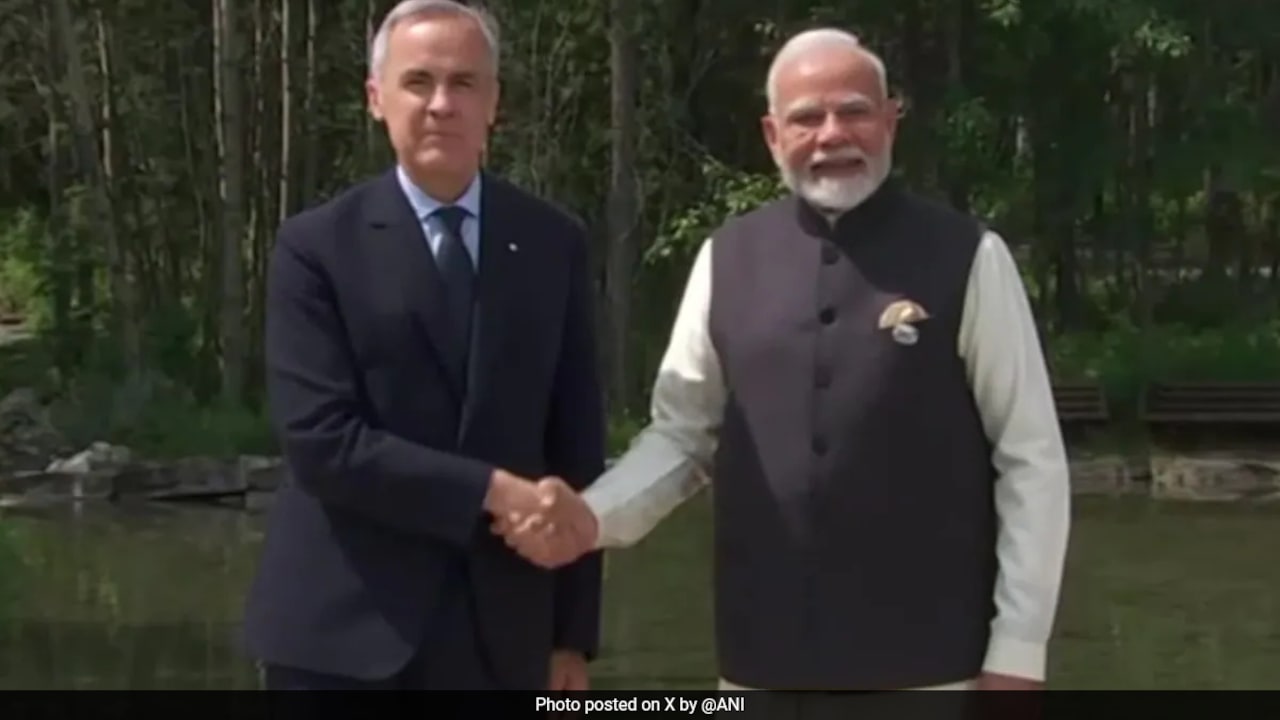
PM Modi to Visit Canada December 11-12 Following Talks with PM Carney
about 2 hours ago · 3 sources

politics
ECI Conducts Voter List Revisions Amid Allegations of Irregularities
about 2 hours ago · 2 sources

politics
Supreme Court Issues Notice to ECI Over Opposition Pleas on SIR Irregularities
about 15 hours ago · 3 sources
PreviousentertainmentRyan Phillippe Recalls 2006 Oscars Night with Reese WitherspoonNextbusinessWorld Bank Targets Fivefold Growth in Critical Minerals Financing by 2030
Discussion
Leave a comment