politicsCovered by 2 Sources
Vatican and US Sources Discuss Opposition to Livestreamed Execution
October 10, 2026 at 2:30 AM1 min read
AI Summary
A plan to livestream a military firing squad execution has drawn opposition from multiple sources. Defense Secretary Pete Hegseth's plan to livestream the execution next month is reportedly causing a fierce outcry of opposition from both sides of the political spectrum in the US. Internationally, Cardinal Pietro Parolin condemned the proposal to broadcast the execution of the Fort Hood shooter, calling it 'unacceptable to turn death into a spectacle.' The plan involves broadcasting the execution of the Fort Hood shooter.
World View
2 perspectivesUSA's perspective
The Hill
A plan to livestream a military firing squad execution has drawn opposition from multiple sources. Defense Secretary Pete Hegseth's plan to livestream the execution next month is reportedly causing a fierce outcry of opposition from both sides of the political spectrum in the US. Internationally, Cardinal Pietro Parolin condemned the proposal to broadcast the execution of the Fort Hood shooter, calling it 'unacceptable to turn death into a spectacle.' The plan involves broadcasting the execution of the Fort Hood shooter.
Turkey's perspective
Anadolu Agency
A plan to livestream a military firing squad execution has drawn opposition from multiple sources. Defense Secretary Pete Hegseth's plan to livestream the execution next month is reportedly causing a fierce outcry of opposition from both sides of the political spectrum in the US. Internationally, Cardinal Pietro Parolin condemned the proposal to broadcast the execution of the Fort Hood shooter, calling it 'unacceptable to turn death into a spectacle.' The plan involves broadcasting the execution of the Fort Hood shooter.
The Hidden Strings
Patterns visible only when every country's coverage is placed side by side — the connections no single source draws.
Vocabulary
The Vocabulary String: Political Mechanics vs. Moral Spectacle
100%
The clusters use fundamentally different vocabularies to describe the same event. Cluster A employs terms like 'bipartisan pushback,' 'security,' and 'plan,' framing the issue as a policy debate. Conversely, Cluster B uses moral and religious language such as 'unacceptable,' 'vatican calls,' and 'turn death into a spectacle,' emphasizing the ethical violation rather than the political process.
bipartisan pushbackplan for livestream executionsecurityvatican callsunacceptable
Frame Inversion
The Frame Inversion: Policy Debate vs. Moral Atrocity
95%
The core event of the livestreamed execution is framed differently by the two sources. The US source (The Hill) focuses entirely on the internal political conflict and policy mechanics surrounding the plan. The Vatican/Turkey source, however, bypasses the political debate entirely, framing the event solely as a moral and religious atrocity that must be condemned.
The Hill: Fierce, bipartisan pushback over Hegseth's plan for livestream executionAnadolu Agency: Vatican calls planned livestream of execution in US 'unacceptable'
Timing
The Timing String: Moral Condemnation Precedes Political Detail
90%
The narrative flow suggests that the moral condemnation of the act was the initial public reaction. The Anadolu Agency report, featuring the Vatican's moral objection, was published 24 minutes before The Hill report, which then provided the detailed, internal political context of the opposition.
2026-10-09T20:49 Turkey Anadolu Agency: Vatican calls planned livestream of execution in US 'unacceptable'2026-10-09T21:13 USA The Hill: Fierce, bipartisan pushback over Hegseth's plan for livestream execution
How Each Side Framed It
Internal political conflict over military policy
USA
Favors the critics and opposition to the plan, highlighting political disagreement.
fiercebipartisan pushbackplan for livestream execution
Moral and religious condemnation of spectacle
Turkey
Favors the moral critique, framing the act as a violation of dignity.
vatican callsunacceptableturn death into a spectaclecondemns
What Mainstream Coverage Missed
Angles present in the cross-border material that the dominant coverage buried or skipped.
- The moral condemnation of the execution was the initial public reaction, preceding the detailed internal political conflict reported by the US source.
- The two sources use fundamentally different vocabularies: one frames the issue as a policy debate ('bipartisan pushback,' 'security'), while the other uses purely moral language ('unacceptable,' 'spectacle').
- The US coverage focuses entirely on the mechanics of political disagreement, completely bypassing the ethical dimension of the act itself.
The Beyond the Borders PoV
The Question
Whether the military should livestream the execution of the Fort Hood shooter.
The military should livestream the execution of the Fort Hood shooter.
Despite strong opposition from religious and ethical leaders, the military should proceed with livestreaming the execution. The evidence shows that the proposal has already generated significant controversy, including condemnation from Cardinal Pietro Parolin and the Vatican. Therefore, the military's decision to proceed suggests a prioritization of public spectacle or deterrent effect over ethical concerns.
The existence of a plan, such as Defense Secretary Pete Hegseth's proposal to livestream a military firing squad execution, demonstrates that the military views this action as a viable policy option, suggesting that the potential deterrent or public messaging value outweighs the ethical outcry.
The fact that the proposal has drawn condemnation from high-profile religious figures, such as Cardinal Pietro Parolin, who called it 'unacceptable to turn death into a spectacle,' suggests that the military's decision to proceed is a deliberate assertion of state authority and its right to define the boundaries of public spectacle.
The Vatican's explicit call that broadcasting an execution in the US is 'unacceptable' establishes a clear ethical opposition, but the military's ability to proceed despite this opposition implies that the institutional mandate for such a livestream is considered necessary for its internal disciplinary or public relations goals.
These are AI-generated arguments built from the evidence available across the source material. They do not imply that any publisher endorses either position.
Disclaimer
The summary and perspectives above are AI-generated from the source articles listed below. They may contain errors or omissions. Always verify with the original sources. Beyond the Borders is a news aggregation platform and does not produce original journalism.
How does this story make you feel?
What each source is saying
2 sourcesTheir Angle
Article Preview
Welcome to The Hill's Defense & NatSec newsletter {beacon} Defense &National Security Defense &National Security The Big Story Fierce, bipartisan pushback over Hegseth's plan for a livestream execution Defense Secretary Pete Hegseth’s plan to livestream a military firing squad execution next month is causing a fierce outcry of opposition from both sides of the...
More from politics

politics
Delhi on High Alert for CJP Protest Demanding CEC Resignation on October 10
1 day ago · 2 sources
politics
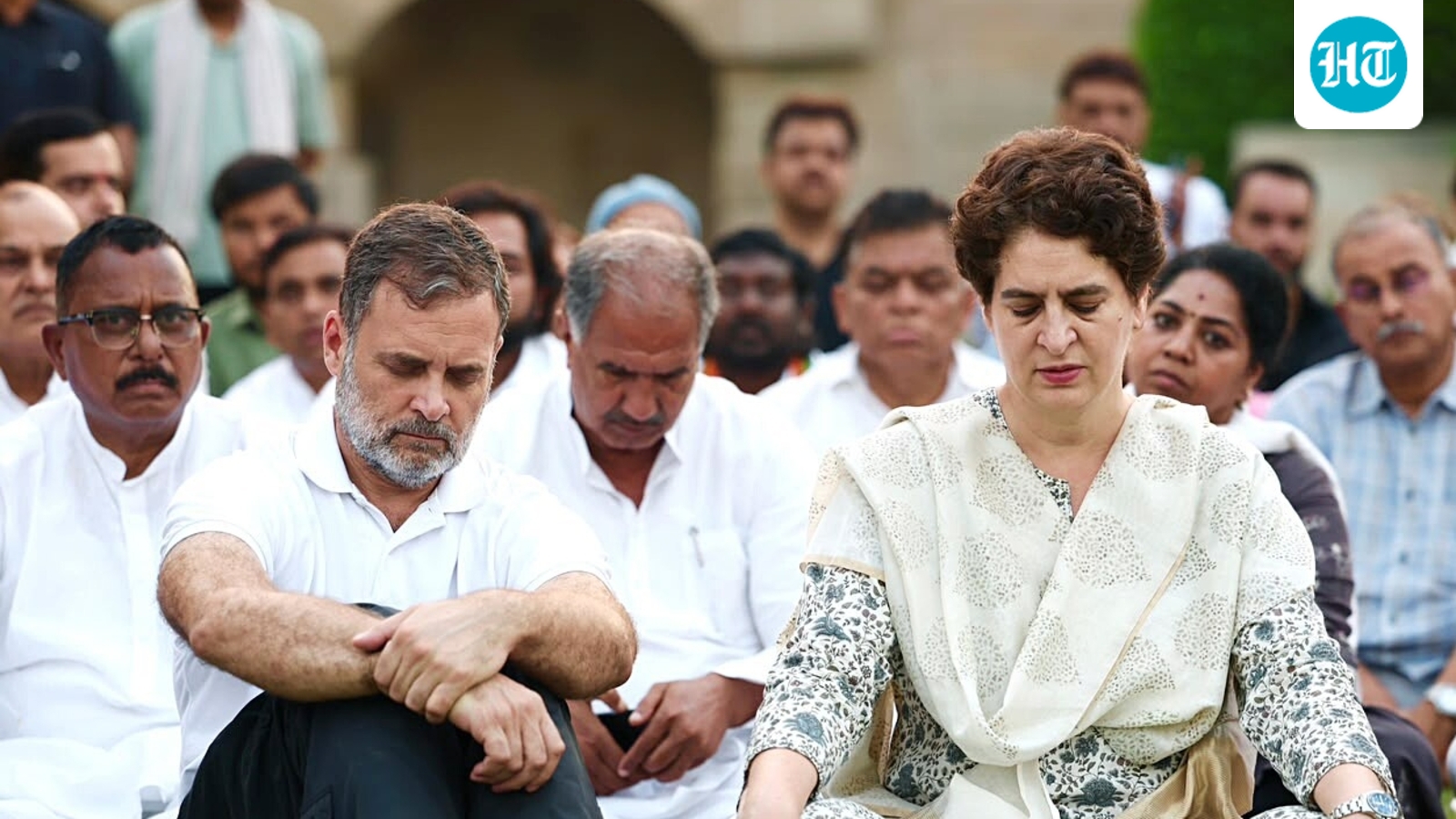
Rahul Gandhi addresses Opposition MPs amid protests against CEC Gyanesh Kumar
1 day ago · 2 sources
politics
BJP Wins Nagaon Lok Sabha By-election; Congress Faces Criticism
1 day ago · 2 sources
Discussion
Leave a comment