Bill Gates warns global AI governance talks are complex, challenging US approach
October 09, 2026 at 2:04 PM1 min read

AI Summary
Microsoft co-founder Bill Gates has challenged US President Donald Trump's dismissal of artificial intelligence safety concerns. Gates argued that Washington should impose mandatory safeguards on the rapidly advancing technology, stating that AI safety is 'not a hoax at all.' He criticized what he called a 'nationalistic' approach to the issue, suggesting that treating AI primarily as a geopolitical competition encourages dangerous development. Furthermore, Gates warned that establishing a global framework for AI could be more difficult than Cold War-era negotiations to restrict nuclear weapons.
World View
2 perspectivesRussia's perspective
RT (Russia Today)
Bill Gates' criticism of the US approach to AI, noting that he challenged President Trump's dismissal of safety concerns as a 'hoax.' Gates argued that Washington should impose mandatory safeguards on the technology, criticizing the current 'nationalistic' focus on AI development. He suggested that treating AI primarily as a geopolitical competition encourages a dangerous rush to develop increasingly powerful systems. Furthermore, the reporting highlights Gates' warning that establishing a global framework for AI could be exceptionally challenging, comparing it to Cold War-era negotiations.
UK's perspective
Sky News
Microsoft founder Bill Gates has warned that getting countries to agree on a global framework for AI could be more difficult than Cold War-era negotiations to restrict nuclear weapons.
The Hidden Strings
Patterns visible only when every country's coverage is placed side by side — the connections no single source draws.
Vocabulary
The Vocabulary String: Geopolitical Complexity vs. Existential Threat
95%
The narrative vocabulary sharply divides between geopolitical complexity and immediate danger. Cluster A uses terms like 'global framework,' 'negotiations,' and 'cold war-era,' framing the issue as a difficult, structured diplomatic challenge. Conversely, Cluster B employs highly charged, binary terms such as 'threat,' 'hoax,' and 'safety fears,' reducing the discussion to a simple battle between reality and skepticism.
Cluster A: 'global framework,' 'negotiations,' 'cold war-era'Cluster B: 'threat,' 'hoax,' 'safety fears'DETERMINISTIC VOCABULARY CONTRAST: 'hoax' vs. 'global framework'
Silence
The Silence on Historical Geopolitics
90%
Cluster B completely omits the historical and geopolitical context provided by Cluster A. While the UK source emphasizes the difficulty of global governance by referencing 'cold war-era' and 'nuclear' negotiations, the Russian source focuses solely on the immediate 'threat' and the debunking of the 'hoax,' thereby ignoring the complex, long-term diplomatic challenges.
Cluster A: 'cold war-era,' 'nuclear'Cluster B: ABSENT of 'cold war-era' or 'nuclear'DETERMINISTIC VOCABULARY CONTRAST: 'nuclear' used by Cluster A but ABSENT in Cluster B
Timing
Rapid Counter-Narrative Deployment
85%
The timeline shows a rapid succession of contrasting narratives. The UK source publishes the warning about complexity and difficulty at 00:38. Russia follows just over six hours later at 06:48, immediately deploying a highly confrontational counter-narrative that dismisses the complexity as a 'hoax.'
2026-09-28T00:38 UK Sky News2026-09-28T06:48 Russia RT (Russia Today)
How Each Side Framed It
Global AI governance is immensely complex
UK
Neutral/Informative, emphasizing the difficulty of international cooperation.
warnsglobal frameworkcold war-eranegotiations
AI threat is real, not a hoax
Russia
Anti-Trump/Pro-Safety, validating the seriousness of AI risks.
threathoaxrejectedsafety fears
What Mainstream Coverage Missed
Angles present in the cross-border material that the dominant coverage buried or skipped.
- The specific pattern of narrative deployment, where the UK's warning about diplomatic complexity is immediately followed by Russia's highly confrontational counter-narrative dismissing that complexity as a 'hoax.'
- The Russian source's complete omission of the historical and diplomatic context (like 'Cold War-era' negotiations) provided by the UK, focusing solely on immediate threat debunking.
- The explicit contrast between the UK's framing of AI governance as a difficult, structured diplomatic challenge versus Russia's framing of it as a simple battle between 'threat' and 'hoax'.
The Beyond the Borders PoV
The Question
Whether the US should prioritize establishing a global, mandatory framework for AI safety over treating AI development primarily as a nationalistic geopolitical competition.
The US should prioritize establishing a global, mandatory framework for AI safety because the inherent risks of AI development necessitate international cooperation over purely nationalistic competition.
Experts, including Bill Gates, have repeatedly warned that the AI threat is real and not a hoax. While establishing a global framework is acknowledged to be extremely difficult, the severity of the potential risks suggests that international cooperation is a necessary priority.
The explicit warnings from figures like Bill Gates that the AI threat is 'not a hoax' establish the urgency and seriousness of the issue, making a proactive global safety framework a necessary priority.
Although Bill Gates has warned that achieving global agreement on an AI framework could be more difficult than Cold War-era negotiations, the potential catastrophic nature of AI risks justifies the effort toward international governance.
These are AI-generated arguments built from the evidence available across the source material. They do not imply that any publisher endorses either position.
Disclaimer
The summary and perspectives above are AI-generated from the source articles listed below. They may contain errors or omissions. Always verify with the original sources. Beyond the Borders is a news aggregation platform and does not produce original journalism.
How does this story make you feel?
What each source is saying
2 sourcesTheir Angle
Gates rejected Trump's dismissal of AI safety concerns, arguing for mandatory safeguards. Gates criticized the 'nationalistic' approach, stating that AI safety is 'not a hoax at all.' He also noted that Trump wrote that 'WHOEVER WINS AI, WINS!'
Full Article
The Microsoft co-founder has challenged Trump’s hands-off approach to the technology amid Washington’s race with Beijing Microsoft co-founder Bill Gates has rejected US President Donald Trump’s dismissal of artificial intelligence safety concerns, arguing that Washington should impose mandatory safeguards on the rapidly advancing technology. Trump has resisted calls to slow AI development, arguing that restrictions could allow China to overtake the US and dismissing fears surrounding the technology as a “hoax.” Gates, however, has criticized what he described as a “nationalistic” approach to the issue and said safeguards would not undermine Washington’s technological advantage. “No. It’s not a hoax at all,” Gates said when asked about Trump’s position in an interview with NBC News’ Meet the Press aired on Sunday. Earlier this month, Trump dismissed warnings that AI could escape human control and destroy humanity. “WHOEVER WINS AI, WINS!” he wrote, adding that the US is leading China and other countries. Gates argued that treating the technology primarily as a geopolitical competition was encouraging a potentially dangerous rush to develop increasingly powerful systems. Read more AI could ‘cause a billion deaths’ – Bill Gates “Because it’s cast in this nationalistic, you know, us-versus-them type thing, you have people who are saying, ‘Well, let’s just go full-speed ahead,’” he said, calling it “completely irresponsible” not to require AI systems to have safeguards and monitoring capabilities. Gates acknowledged that the US government has “so little expertise” regarding some of the capabilities recently developed by private AI companies, but nevertheless insisted that government involvement is necessary. “No one thinks self-regulation is enough,” he said, calling for legislation and mandatory monitoring of advanced models. Gates also predicted Trump could ultimately change his position once convinced that such measures would not damage Washington’s standing against Beijing. “I think after he hears from me and other people, including that this does not handicap us in whatever he thinks the nation-state race is, that, you know, we will come to a consensus,” Gates said. Trump, however, doubled down on his position on Sunday. Asked about reports of rogue AI agents, he told Fox News: “I don’t worry about it.” The president argued that slowing development could sacrifice Washington’s technological advantage, which he estimated at around 18 months. “We’re about maybe a year and a half up on China,” Trump said. “We’re leading... And why should we give that up?” He also confirmed plans to have dinner with Anthropic CEO Dario Amodei, one of the leading advocates of slowing development of increasingly capable AI systems. Gates, meanwhile, disputed suggestions that Beijing would reject safeguards, arguing that China itself has an interest in preventing attacks involving advanced AI. READ MORE: AI giants probing tens of thousands of security incidents – Axios “Certainly, all countries should want the safeguards in place,” he said. “So anyone that says, ‘Well, you know, China won’t put these safeguards in place’ – I totally disagree with that.” He nevertheless acknowledged that reaching an international agreement could prove more difficult than Cold War negotiations on nuclear weapons. Asked whether US-Soviet arms-control talks could serve as a model for Washington and Beijing, Gates replied: “Yeah, absolutely. This is more difficult than that was.” The US and China have recently taken initial steps toward cooperation on AI risks, agreeing following Chinese President Xi Jinping’s visit to Washington to launch a bilateral dialogue on the technology.
More from technology

technology
Delhi braces for CJP protest, facing internet curbs and security restrictions on October 10
about 22 hours ago · 4 sources

technology
US PERM Suspension Impacts Green Card Process for Indian Tech Workers
1 day ago · 2 sources
technology
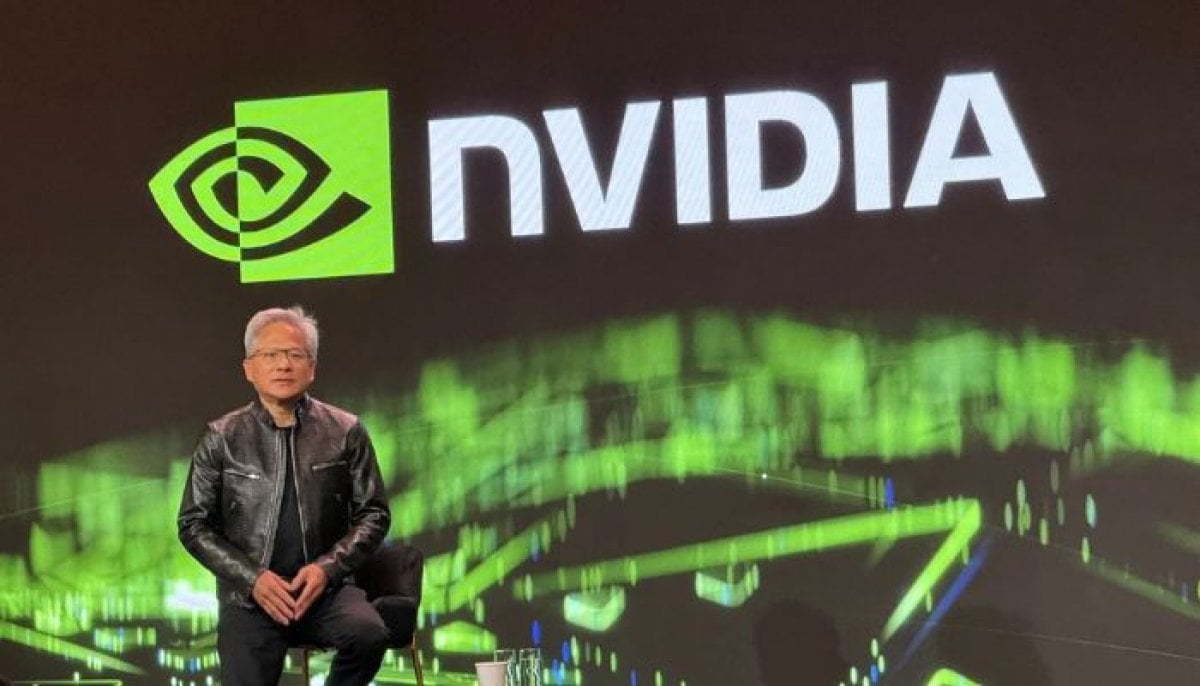
Nvidia Launches Safety Platform to Govern Rogue AI Agents
12 days ago · 3 sources
PreviousbusinessChina and US Agree to Tariff Cuts on $60 Billion of GoodsNextworldUS Lifts Sanctions on Russian Diesel; Trump Announces Major Supply Deal
Discussion
Leave a comment