Trump crashes Jensen Huang’s live interview: ‘AI fears are a hoax,’ data centres are ‘great, oil of the next 25 years'
September 16, 2026 at 2:26 AM1 min read

AI Summary
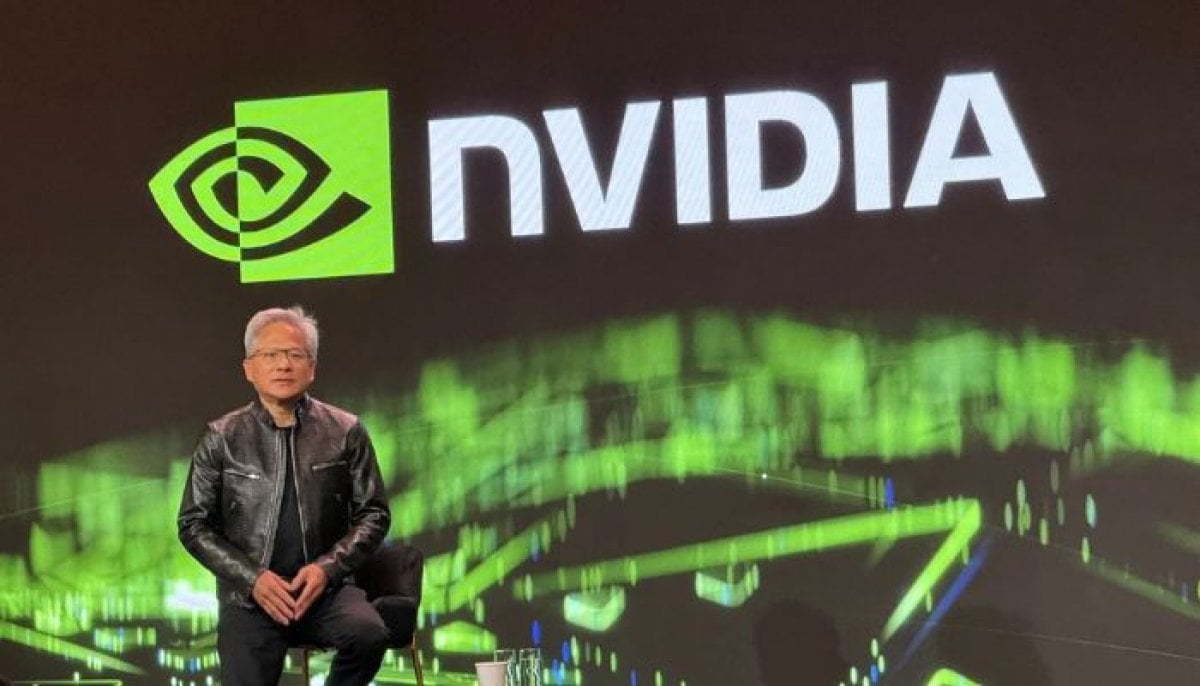
US President Donald Trump made a surprise appearance — by telephone— during a live interview with Nvidia CEO Jensen Huang, abruptly inserting himself into one of the tech industry's most heated debates: whether the rapid development of artificial intelligence (AI) needs stronger safety rules. Huang was speaking at the All-In Summit in Los Angeles on Sept. 14 when he received Trump's call. download the Gulf News app — simply click here . ""The robots are not going to be taking over the world," Trump said, dismissing the idea that AI could lead to catastrophic consequences. He also criticised calls for slowing AI development, saying the United States must be careful but should not stop an industry that he sees as strategically and economically vital. "The data centres are great," Trump said, according to reports of the call, arguing that they create wealth and benefit states.
World View
2 perspectivesUAE's perspective
Gulf News
Gulf News reported on US President Donald Trump’s surprise telephone appearance during an interview with Nvidia CEO Jensen Huang at the All-In Summit. During this intervention, Trump dismissed concerns about artificial intelligence taking over the world, calling such fears a "hoax." He also criticized calls to slow AI development, asserting that while caution is necessary, the United States should not halt an industry he views as strategically and economically vital. Furthermore, Trump emphasized the immense value of data centers, comparing their strategic importance to oil and suggesting AI could surpass the internet in scale.
UK's perspective
BBC News
The US president's comments come after Anthropic co-founder Jack Clark told the BBC an AI "kill switch" may need to be mandatory.
The Hidden Strings
Patterns visible only when every country's coverage is placed side by side — the connections no single source draws.
Vocabulary
The Infrastructure vs. Safety Dichotomy
95%
There is a stark vocabulary contrast between discussing technological infrastructure and dismissing safety concerns. Cluster B uses highly specific, technical terms like 'data centres,' 'infrastructure,' and 'live interview.' Conversely, Cluster A focuses almost entirely on policy failure using words such as 'hoax' and 'safeguards,' revealing two distinct narrative lenses applied to the same event.
datacentersinfrastructurelive interviewsafeguards
Timing
Narrative Progression from Safety Warning to Economic Opportunity
90%
The reporting timeline suggests a deliberate narrative progression. The UK report (BBC) leads with the immediate policy failure, focusing on dismissing safety warnings ('hoax'). The later UAE report (Gulf News) shifts the focus entirely to market confidence and economic value by emphasizing 'oil of the next 25 years,' suggesting an attempt to reframe the discussion from risk management to investment opportunity.
2026-09-15T03:47 UK BBC News2026-09-15T05:04 UAE Gulf News'hoax' used by [Political dismissal of technical safety warnings]'oil of the next 25 years' used by [Political interruption of high-tech industry discourse]
Silence
The Omission of Economic Scope in Safety Discourse
85%
Cluster A, while focusing on the political dismissal of safety warnings, completely omits the specific economic and physical scope of the technology being discussed. The detailed mention of 'data centres' and their value as 'oil' in Cluster B is a concrete detail that Cluster A fails to incorporate into its narrative of policy failure.
'data' used by [Political interruption of high-tech industry discourse] but ABSENT in [Political dismissal of technical safety warnings]'centers' used by [Political interruption of high-tech industry discourse] but ABSENT in [Political dismissal of technical safety warnings]Cluster A: 'rejects calls for greater safeguards'Cluster B: 'data centres are great, oil of the next 25 years'
How Each Side Framed It
Political dismissal of technical safety warnings
UK
Favors expert calls for regulation by highlighting Trump's rejection of safeguards.
'hoax'rejects calls for greater safeguardsmandatory
Political interruption of high-tech industry discourse
UAE
Observational and dramatic, focusing on the spectacle of the disruption.
'crashes'abruptly inserting himself'oil of the next 25 years'
What Mainstream Coverage Missed
Angles present in the cross-border material that the dominant coverage buried or skipped.
- The specific economic framing of data centers as 'oil of the next 25 years,' a detail emphasized by the UAE, is entirely absent from discussions focused on regulatory safety warnings.
- The reporting exhibits a clear narrative progression: moving from an immediate policy failure (UK's focus on 'hoax') to a strategic re-framing centered on long-term market confidence and investment opportunity (UAE).
- Those focusing solely on the political dismissal of safety warnings fail to incorporate the concrete physical scope or economic value of the technology, ignoring the detailed mention of data centers.
The Beyond the Borders PoV
The global media debate over AI safety is not about risk management; it is a carefully managed distraction from the fundamental conflict between regulation and capital accumulation.
The contrast between framing safety as a 'hoax' (UK) versus celebrating data centers as 'oil' (UAE) reveals a single, powerful incentive. The pattern suggests that any discussion of mandatory safeguards or technical limitations is immediately co-opted to minimize its economic scope. Governments and institutional media are incentivized to frame regulation not as necessary guardrails, but as an impediment to market growth. This narrative machinery ensures the focus remains on investment opportunity rather than systemic risk. The silence surrounding the true cost of AI failure confirms that capital accumulation,the promise of 'oil',is always prioritized over public safety.
This is our editorial interpretation of the cross-source evidence above, not a report of established fact. The sourced coverage it draws on is listed below.
Disclaimer
The summary and perspectives above are AI-generated from the source articles listed below. They may contain errors or omissions. Always verify with the original sources. Beyond the Borders is a news aggregation platform and does not produce original journalism.
How does this story make you feel?
What each source is saying
2 sourcesTheir Angle
Trump crashes Jensen Huang’s live interview: ‘AI fears are a hoax,’ data centres are ‘great, oil of the next 25 years'
Full Article
US President Donald Trump made a surprise appearance — by telephone— during a live interview with Nvidia CEO Jensen Huang, abruptly inserting himself into one of the tech industry's most heated debates: whether the rapid development of artificial intelligence (AI) needs stronger safety rules. Huang was speaking at the All-In Summit in Los Angeles on Sept. 14 when he received Trump's call. He put the president on speakerphone before the live audience, turning an interview about AI into an impromptu presidential intervention.. Get it: Fast, verified news for FREE ... download the Gulf News app — simply click here . Trump's message was blunt: concerns about AI taking over the world are a "hoax.""The robots are not going to be taking over the world," Trump said, dismissing the idea that AI could lead to catastrophic consequences. He also criticised calls for slowing AI development, saying the United States must be careful but should not stop an industry that he sees as strategically and economically vital. Trump also went after opposition to the enormous data centres being built to power AI."The data centres are great," Trump said, according to reports of the call, arguing that they create wealth and benefit states. He compared data centers' strategic importance to oil and described AI as potentially bigger than the internet.. Huang: AI fears are not grounded in scienceHuang, whose Nvidia has become one of the central beneficiaries of the AI boom, largely agreed with Trump's broader argument. Earlier in the discussion, Huang criticised what he called AI "doomerism," arguing that predictions of AI destroying humanity or eliminating huge portions of American jobs are not supported by science. In a July interview with Axios, Huang similarly argued that policymakers should not allow science-fiction scenarios to determine AI policy. But Huang drew an important distinction between legitimate safety concerns and predictions about an apocalyptic future. He said whistleblowing is legitimate: highly specific predictions about AI destroying humanity require scientific evidence.. The timing is significantThe exchange comes amid an unusually intense fight inside the technology industry. Anthropic CEO Dario Amodei has called for a slower, more coordinated approach to advanced AI development and stronger government oversight. Leaders and prominent figures associated with OpenAI, Google DeepMind and SpaceX have also expressed concern about increasingly powerful AI systems. Trump has taken the opposite position, portraying excessive regulation as a threat to America's technological lead over China. The president's intervention therefore wasn't simply an off-the-cuff phone call. It placed the White House squarely behind the "build faster" camp of the AI debate.. Social media catches the momentThe surprise exchange quickly spread across social media. An X post circulating shortly after the appearance summarized Trump's position bluntly: AI taking over the world and destroying humanity is a "hoax."Instagram was similarly flooded with clips of Huang taking Trump's call onstage. Several posts highlighted the unusual spectacle of the Nvidia CEO putting the US president on speakerphone during a live technology summit, while others focused on Trump's dismissal of AI fears and his defense of data-center construction. The moment was tailor-made for social media: one of the world's most powerful technology executives, discussing the future of AI, suddenly receives a call from the president — and puts him live on speaker.. The bigger fight: AI versus the power billBehind the dramatic exchange is a much more concrete issue. AI requires enormous amounts of computing power. That means chips, servers, data centers, electricity, cooling systems, water and transmission infrastructure. Trump's enthusiastic defense of data centers comes as communities and policymakers increasingly debate their local costs and benefits. The pro-AI argument is straightforward: data centers bring investment, jobs, tax revenue and technological infrastructure — and can make regions participants in the next major industrial revolution. The opposing argument is equally concrete: communities may have to deal with higher electricity demand, pressure on grids, water consumption, land use and environmental impacts. That debate is different from the philosophical question of whether AI could eventually threaten humanity. And that distinction matters. Trump may dismiss existential AI fears as a hoax, but the physical infrastructure required to run AI is very real. So is the electricity. So is the water. So is the investment. And so is the question of who ultimately pays for the AI boom. For Huang and Trump, the answer is clear: build it. For their critics, the question is whether America can build it fast enough without losing control of the technology — or paying an unexpectedly high price for the infrastructure underneath it. The AI race is no longer simply about who has the smartest model. Increasingly, it is about who has the chips, power, water and data centers to run it.. Trump administration reluctant to slow AI, Democrats see urgent need. US way ahead of China in AI, says Trump. AI experts warn governments not to ignore extinction risks.
More from technology


PreviousbusinessBRICS Adopts Declaration Focusing on Trade and Multilateralism at Annual SummitNextbusinessChina and US Agree to Tariff Cuts on $60 Billion of Goods
Discussion
Leave a comment