G7 Leaders Discuss Ukraine and Middle East Conflicts Amid Rising Tensions
June 19, 2026 at 4:22 AM2 min read

AI Summary
The G7 summit in France has opened with leaders focusing on pressing global issues, particularly the ongoing conflicts in Ukraine and the Middle East. This meeting comes shortly after President Trump's announcement regarding an agreement aimed at ending the U.S. war against Iran, a development that has shifted attention from Ukraine to the Iranian conflict. The summit is taking place against a backdrop of escalating violence in the region, including recent airstrikes in Lebanon that resulted in multiple casualties. As leaders gather to discuss these critical matters, the implications of their decisions could have far-reaching effects on international relations and regional stability. The discussions are expected to address not only the immediate humanitarian crises but also the broader geopolitical dynamics at play, including the roles of major powers and the potential for future conflicts. The outcomes of this summit could significantly influence the course of U.S. foreign policy and its relationships with both allies and adversaries in the coming months.
World View
5 perspectivesUSA's perspective
From the American perspective, the G7 summit represents a crucial opportunity for President Trump to solidify his administration's foreign policy objectives, particularly regarding Iran and Ukraine. The recent agreement to end hostilities with Iran is seen as a significant diplomatic achievement, although it has drawn criticism from various quarters, including some G7 allies who are concerned about Iran's regional ambitions. The U.S. aims to reassure its allies of its commitment to collective security while navigating the complexities of the Iranian situation. Additionally, the ongoing war in Ukraine remains a focal point, with the U.S. emphasizing the need for a united front against Russian aggression. The summit discussions are likely to reflect the U.S. stance on these issues, advocating for a coordinated response among G7 nations to address both the humanitarian crises and the geopolitical challenges posed by adversarial states. The outcome of these talks could redefine alliances and influence future engagements in both regions.
Russia's perspective
The Russian media has reported on the tragic incident involving an eight-year-old girl killed in a Ukrainian drone raid on Moscow, highlighting the escalating violence in the region. This event underscores the ongoing conflict between Ukraine and Russia, which has seen a significant increase in hostilities. The Russian government has condemned the attack, framing it as a violation of international norms and an act of aggression by Ukraine. As the G7 leaders convene, Russia perceives their discussions as an attempt to isolate it on the global stage while ignoring the realities of the conflict. The Kremlin is likely to use this incident to rally domestic support and justify its military actions in Ukraine. Furthermore, Russia may leverage the G7 summit to highlight what it sees as the hypocrisy of Western nations, which criticize its actions while failing to address the humanitarian impact of their own military interventions in the region. This narrative could serve to bolster Russia's position in the ongoing geopolitical struggle.
Iran's perspective
Iranian media has focused on the participation of a Pakistani delegation at the funeral of the martyred leader of the Islamic Revolution, Ayatollah Seyyed Ali Khamenei. This event is significant as it reflects Iran's regional alliances and the solidarity among Islamic nations in the face of external pressures. Prime Minister Shehbaz Sharif's attendance underscores Pakistan's commitment to maintaining strong ties with Iran, especially amid the backdrop of the G7 summit discussions on Iran's nuclear program and regional influence. Iran views the G7's focus on its activities as an attempt to undermine its sovereignty and influence in the Middle East. The Iranian government is likely to emphasize its right to defend its interests and assert its role as a key player in regional stability. As the G7 leaders discuss their strategies, Iran remains vigilant, prepared to counter any actions that may threaten its national security or regional standing. The outcomes of the summit could have significant implications for Iran's foreign policy and its relationships with neighboring countries.
EU's perspective
European media has reported on the recent airstrikes in Lebanon that resulted in 18 deaths, raising alarms about the fragile state of peace in the region. The timing of these strikes coincides with the G7 summit, where leaders are expected to address the escalating violence and its implications for regional stability. The EU is particularly concerned about the humanitarian impact of such military actions and the potential for further escalation. European leaders are likely to advocate for diplomatic solutions and increased humanitarian aid to affected areas. The discussions at the G7 summit will also focus on the need for a cohesive European response to the challenges posed by both the Iranian conflict and the situation in Ukraine. The EU aims to position itself as a mediator in these conflicts, promoting dialogue and cooperation among nations. The outcomes of the summit could influence the EU's approach to foreign policy and its role in fostering peace and security in the Middle East and Eastern Europe.
France's perspective
French media has highlighted Vice President Vance's stark warning to Israeli leaders regarding their role in the ongoing conflicts in the Middle East. By criticizing Israel for allegedly obstructing the agreement between Washington and Tehran, Vance has exposed a rift between the U.S. and Israel that could have significant implications for regional diplomacy. France, as a host of the G7 summit, is keenly aware of the delicate balance required to address the concerns of various stakeholders in the region. The French government is likely to advocate for a unified approach among G7 nations to address the humanitarian crises resulting from the conflicts in Lebanon and Gaza. Additionally, France may push for renewed efforts to revive peace talks between Israel and Palestine, emphasizing the need for a sustainable resolution to the ongoing violence. The discussions at the summit will be crucial in shaping France's foreign policy and its commitment to promoting stability and peace in the Middle East.
Analysis
The perspectives from various countries highlight the complex interplay of geopolitical interests surrounding the G7 summit. The U.S. is focused on consolidating its foreign policy objectives, particularly regarding Iran and Ukraine, while Russia emphasizes its narrative of victimization in the ongoing conflict. Iran seeks to assert its regional influence amid external pressures, and the EU is advocating for humanitarian responses to escalating violence. France's position reflects a desire for diplomatic solutions and a balanced approach to regional conflicts. The divergent viewpoints underscore the challenges of achieving consensus among major powers, particularly in addressing the humanitarian crises and geopolitical tensions that define the current landscape.
The Hidden Strings
Patterns visible only when every country's coverage is placed side by side — the connections no single source draws.
Vocabulary
The Vocabulary String: 'martyred' vs 'killed'
80%
The terms 'martyred' and 'killed' are used differently across clusters to describe the same event, with 'martyred' being associated with Pakistan's funeral of an Iranian leader and 'killed' being associated with Russia's drone raid. This contrast reveals a potential framing difference between the clusters.
Pakistan honors Iranian leader's deathRussia attacked by Ukraine, kills child
Vocabulary
The Vocabulary String: 'air raids' vs 'drone raid'
70%
The terms 'air raids' and 'drone raid' are used differently across clusters to describe the same event, with 'air raids' being associated with Israel's attack on Lebanon and 'drone raid' being associated with Russia's attack on Ukraine. This contrast reveals a potential framing difference between the clusters.
Israel attacks Lebanon, kills residentsRussia attacked by Ukraine, kills child
How Each Side Framed It
Global leaders discuss Ukraine and Middle East
USA
The US side is favored in the framing.
g7summit talks
Russia attacked by Ukraine, kills child
Russia
The Ukrainian side is favored in the framing.
drone raidmoscow region governor
Pakistan honors Iranian leader's death
Iran
The Iranian side is favored in the framing.
martyred leaderislamic revolution
Israel attacks Lebanon, kills residents
EU
The Israeli side is favored in the framing.
air raidsisraeli airstrikes
US criticizes Israel, defends Iran
France
The US side is favored in the framing.
stark warningsympathetic to israel
What Mainstream Coverage Missed
Angles present in the cross-border material that the dominant coverage buried or skipped.
- The G7 summit's focus on Ukraine and Middle East conflicts overlooks the role of proxy wars in shaping regional dynamics.
- The framing of the Iranian leader's death as a 'martyrdom' by Pakistan's media highlights the selective narrative around regime change in Iran.
- The EU's emphasis on Israel's alleged attacks on Lebanon ignores the Israeli perspective on self-defense against Hezbollah threats.
The Beyond the Borders PoV
The G7 summit's framing of Ukraine and Middle East conflicts reveals a power struggle between major powers, with proxy wars and selective narratives driving regional dynamics.
This framing overlooks the role of US support for Ukraine and Israeli self-defense against Hezbollah threats. The Iranian leader's death is framed as a 'martyrdom' to justify regime change in Iran, while Israel's actions are downplayed. This selective narrative exposes a power struggle between major powers, with proxy wars driving regional dynamics.
This is our editorial interpretation of the cross-source evidence above, not a report of established fact. The sourced coverage it draws on is listed below.
Disclaimer
The summary and perspectives above are AI-generated from the source articles listed below. They may contain errors or omissions. Always verify with the original sources. Beyond the Borders is a news aggregation platform and does not produce original journalism.
How does this story make you feel?
What each source is saying
5 sourcesTheir Angle
The G7 leaders are focusing on Ukraine and the Middle East, following President Trump's announcement on Iran. The summit is crucial for addressing these global issues.
Article Preview
The talks come on the heels of President Trump's announcement of an agreement to end the U.S. war against Iran. In recent weeks, the Iranian conflict has overshadowed the war in Ukraine.
More from world

world
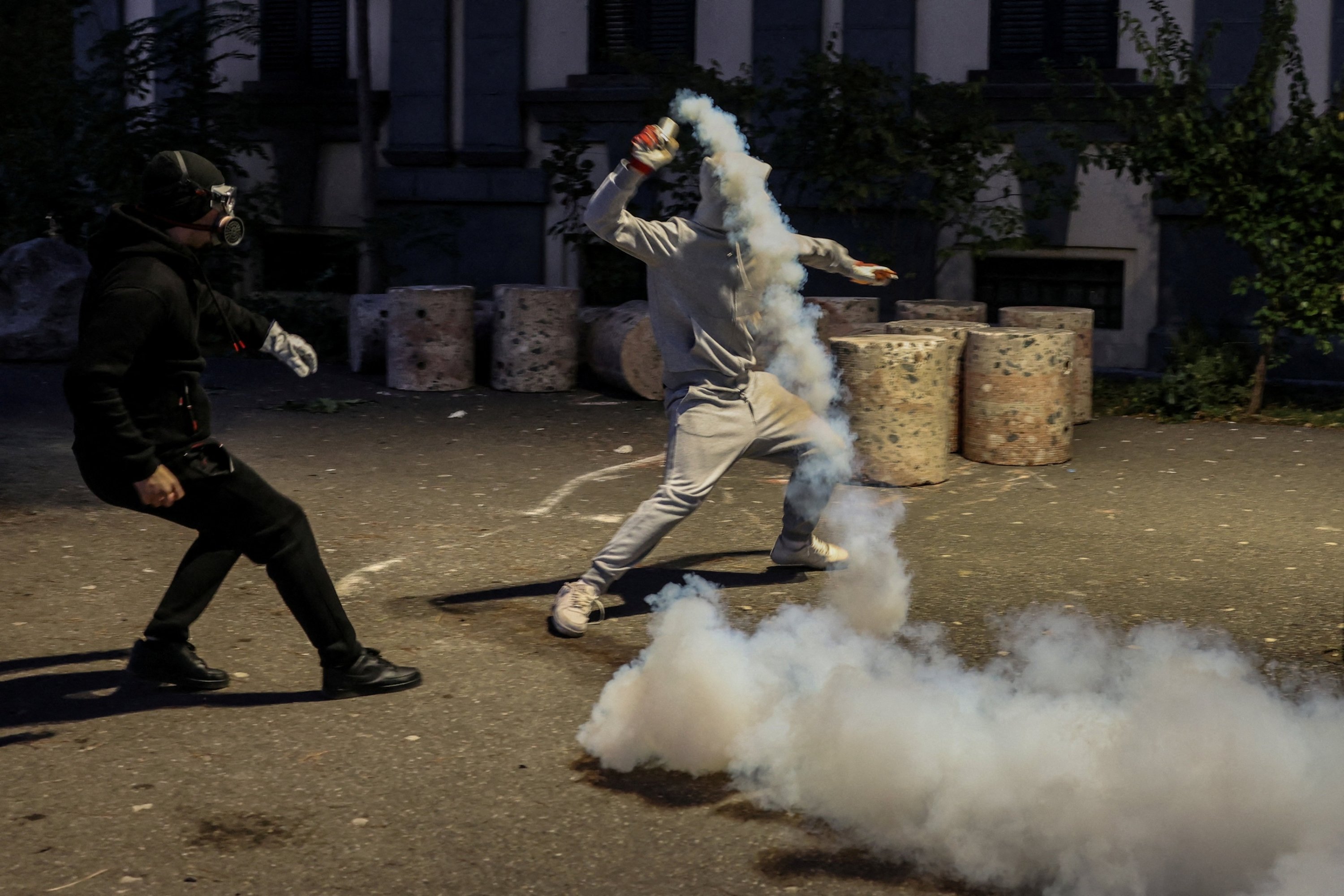
French Riots Lead to Detentions and Investigations Following Weekend Violence
41 minutes ago · 2 sources
world
Unrest and Riots Reported Across Multiple European Countries
41 minutes ago · 2 sources
world
French and UAE Presidents Discuss Cooperation, Energy, and Regional Security
41 minutes ago · 2 sources
PreviousworldDebate Over Executive Power and NATO's Resilience in Current Geopolitical ClimateNextworldUS-Russia Talks Raise Concerns in Europe and Iran
Discussion
Leave a comment